
What Are the 5 Basketball Positions and Their Roles?
What Are the 5 Basketball Positions and Their Roles?

Positions in basketball
Whether you're new to basketball or looking to deepen your understanding of the game, knowing the basketball positions is essential. Every successful team relies on five players working together, each with specific responsibilities that contribute to victory. This guide covers all five basketball positions in detail, their roles, required skills, and how together they create a winning team.
| Position | Number* | Primary role | Essential skills |
|---|---|---|---|
| Point guard | 1 | Playmaker and floor general | Ball-handling, passing, court vision, and speed |
| Shooting guard | 2 | Primary perimeter scorer | Shooting, scoring, ball-handling, and defense |
| Small forward | 3 | Versatile scorer and defender | All-around skills, athleticism, and versatility |
| Power forward | 4 | Rebounder and interior scorer | Strength, rebounding, post play, and mid-range shooting |
| Center | 5 | Rim protector and paint presence | Size, shot-blocking, rebounding, and post scoring |
*Coaches often use numbers as shorthand for positions in play calls and scouting reports, though many teams today use more fluid labels based on role and matchup.
Basketball positions explained
Point guard: The floor general
Usually the team's best ball-handler and decision-maker, the point guard directs the offense and keeps the team organized. They control tempo, read defenses, and make sure the ball finds the right player at the right time.
Main duties:
Initiating plays and managing possessions
Creating scoring chances for teammates
Leading fast breaks and maintaining pace
Prime examples: Stephen Curry, Chris Paul, Luka Dončić, Ja Morant
Shooting guard: The scorer
The shooting guard is often the team's most reliable perimeter threat. They space the floor, attack off the dribble, and help defend opposing guards. Many modern SGs also serve as secondary playmakers.
Main duties:
Scoring from three-point and midrange areas
Creating shots off the dribble or off screens
Defending wings and perimeter players
Prime examples: Michael Jordan, Kobe Bryant, Klay Thompson, Devin Booker
Small forward: The versatile wing
Small forwards are dynamic, all-around athletes blending size, speed, and scoring ability. They often defend multiple positions, scoring, rebounding, defending, and even facilitating the offense. In modern systems, the SF often guards four positions and plays wherever the team needs balance.
Main duties:
Scoring inside and outside
Defending wings and switching onto multiple positions
Creating plays in transition
Prime examples: LeBron James, Kevin Durant, Kawhi Leonard, Jayson Tatum
Power forward: The enforcer & stretch option
Traditionally a physical interior player, the power forward role has evolved. Modern PFs mix physical defense and rebounding with the ability to stretch the floor through perimeter shooting, known as the "stretch four" role.
Main duties:
Setting screens, rebounding, and defending inside
Scoring through post moves or jump shots
Spacing the floor with three-point range
Prime examples: Tim Duncan, Dirk Nowitzki, Anthony Davis, Giannis Antetokounmpo
Center: The anchor
The center is usually the tallest player, anchoring the paint on both ends. They protect the rim, rebound, and finish around the basket. Modern centers also facilitate offense through passing or perimeter play, depending on system.
Main duties:
Defending the rim and contesting shots
Rebounding on both ends
Scoring efficiently near the basket
Prime examples: Shaquille O'Neal, Nikola Jokić, Joel Embiid, Rudy Gobert
Modern basketball: Hybrid positions and positionless play
Today's basketball has evolved beyond traditional position definitions. The modern game emphasizes versatility, with players capable of filling multiple roles depending on matchups and game situations. This has given rise to several hybrid positions:
Combo guards combine the playmaking abilities of point guards with the scoring prowess of shooting guards. These players can initiate the offense or attack aggressively as scorers, making them difficult to defend.
Point forwards possess the size of forwards but the ball-handling and passing skills of point guards. Players like LeBron James revolutionized this concept, showing that larger players could effectively run an offense.
Stretch fours are power forwards who can shoot from three-point range, forcing defenders away from the basket and creating driving lanes for teammates.
This trend toward "positionless basketball" means modern players must develop diverse skill sets. Seven-foot players work on ball-handling, guards practice post moves, and everyone shoots three-pointers. While position labels remain useful for understanding roles, the most successful players transcend traditional boundaries and adapt to whatever their team needs.
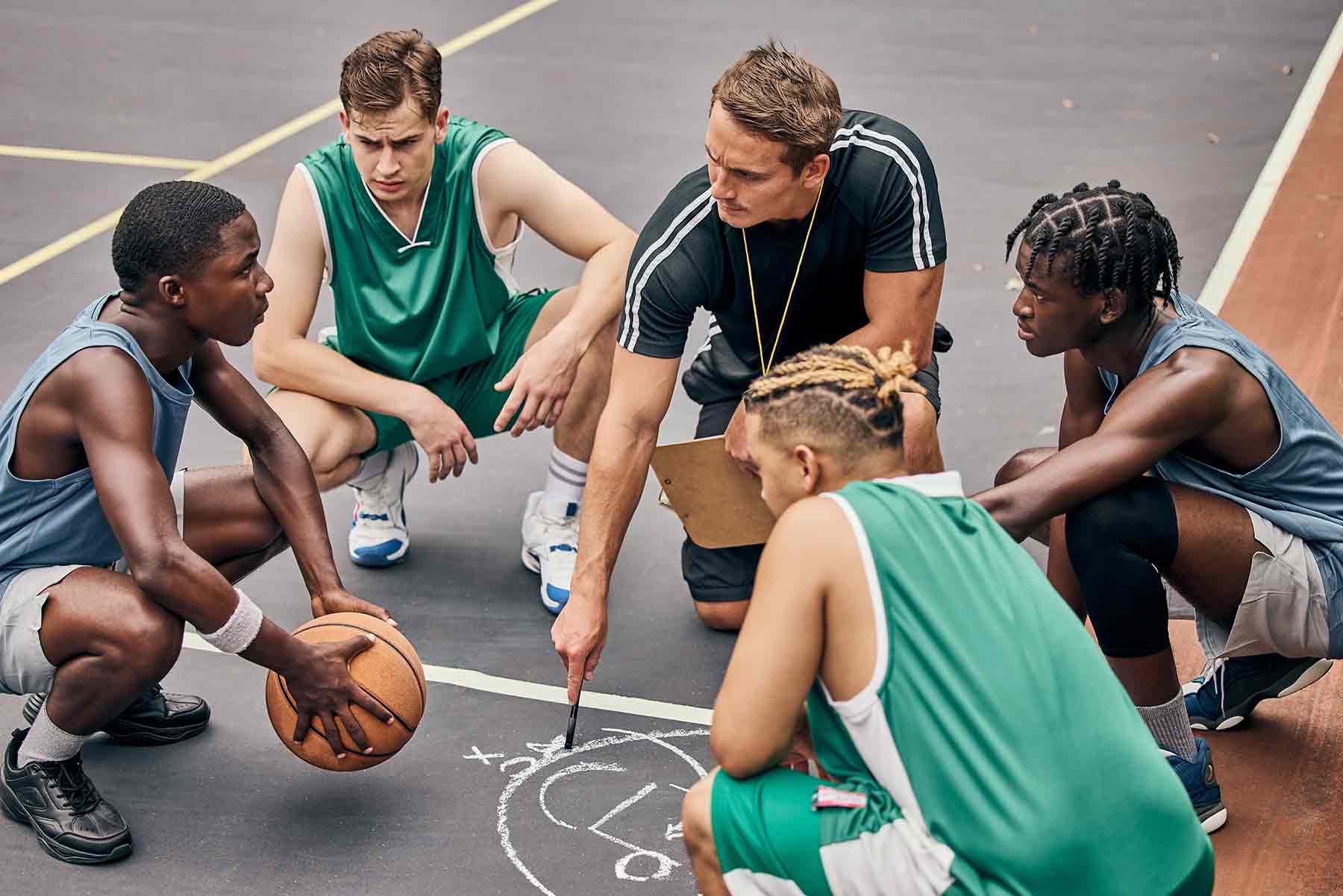
Develop your game with expert training
Learning the positions is the foundation. Mastering skills that overlap across roles—passing, spacing, decision-making, and defense—makes you a more complete player. Modern basketball favors players who can think, move, and play effectively in any spot on the floor.
Ready to take your game to the next level? Find experienced basketball coaches and comprehensive training programs at Lessons.com to help you develop the skills, basketball IQ, and competitive edge to dominate in any position!
Using our proprietary cost database, in-depth research, and collaboration with industry experts, we deliver accurate, up-to-date pricing and insights you can trust, every time.