
Poetic Devices and Poetry Techniques
Poetic Devices and Poetry Techniques

What are poetic devices?
A poetic device is a deliberate technique used by a poet to enhance a poem's literal meaning, sound, or rhythmic structure. Unlike standard prose, poetry relies heavily on these tools to convey feelings and ideas concisely.
Poets use these devices to create distinct moods or to make the text memorable. For example, using a specific rhythm can make a poem sound like a song, while vivid imagery can paint a picture in the reader's mind.
Sound devices in poetry
Sound devices create the music of poetry. These techniques affect how poems sound when read aloud, making them more memorable and emotionally impactful.
Alliteration
Alliteration repeats consonant sounds at the beginning of nearby words. This device adds emphasis and creates a pleasing sound that makes lines more engaging to read aloud.
Writers can use alliteration to set mood. Soft sounds like "s" or "m" create gentle, flowing effects. Harder sounds like "p" or "b" produce stronger, more percussive rhythms.
The key is balance. Too much alliteration can sound forced, but the right amount adds a layer of musicality that enhances the poem's overall impact.
Assonance and consonance
Assonance repeats vowel sounds within words, creating internal harmony. You might hear it in phrases like "The light of the fire is a sight to admire." where the "i" sound echoes throughout.
Consonance works similarly but focuses on consonant sounds anywhere in words. The phrase "struts and frets" demonstrates consonance with its repeated "t" and "s" sounds.
Both devices add subtle music to poetry. They're less obvious than rhyme but create a sophisticated sound that makes poems feel more polished and intentional.
Onomatopoeia
Onomatopoeia uses words that imitate sounds they describe. Words like "buzz," "crash," "whisper," and "sizzle" bring sounds directly into the poem.
This device makes poetry more immersive by engaging readers' sense of hearing. It can make scenes feel more vivid and immediate, as if the action is happening right now. When placed strategically, these sound-imitating words can create powerful moments that readers remember.
Rhyme
Rhyme occurs when words share similar sounds. This classic device creates rhythm and can make poetry feel complete and satisfying.
Internal rhyme happens within a single line, while end rhyme appears at line endings. Both types add musicality that helps poems stick in readers' minds and creates a sense of harmony.
Modern poetry often uses slant rhyme, where words almost rhyme but not perfectly. This gives poets more freedom while maintaining some of the benefits of traditional rhyme schemes.
Euphony and cacophony
Euphony refers to pleasant, harmonious sounds that flow smoothly. Poets create it using soft consonants like "l," "m," "n," and "w" to evoke calm or beauty.
Cacophony is the opposite — harsh, jarring sounds from hard consonants like "k," "g," and "t." These discordant sounds mirror chaos, violence, or discord in the poem's subject.
Both techniques shape the reader's emotional experience. A peaceful garden scene might use euphony, while a battle scene employs cacophony to reinforce its harsh reality through sound.

Figurative language and literary devices
Figurative devices help poets express complex ideas through comparison and imagination. These tools stretch language beyond its literal meaning.
Metaphor
Metaphor directly states that one thing is another, creating powerful comparisons. When Emily Dickinson wrote "Hope is the thing with feathers," she wasn't being literal — she was using metaphor to explore hope's nature.
Unlike simile, metaphor doesn't use "like" or "as." This directness makes the comparison feel more immediate and impactful, inviting readers to see connections they might otherwise miss.
Extended metaphors (also called conceits) run throughout entire poems. They provide a framework that unifies the poem and allows for deeper exploration of the comparison.
Simile
Simile compares two things using "like" or "as." Robert Burns' "My love is like a red, red rose" is one of poetry's most famous similes.
This device makes abstract concepts more concrete and relatable. By comparing something unfamiliar to something readers know, similes help create instant clarity and emotional resonance.
The best similes feel fresh and unexpected. They reveal connections readers hadn't considered before, making familiar things seem new and noteworthy.
Symbolism
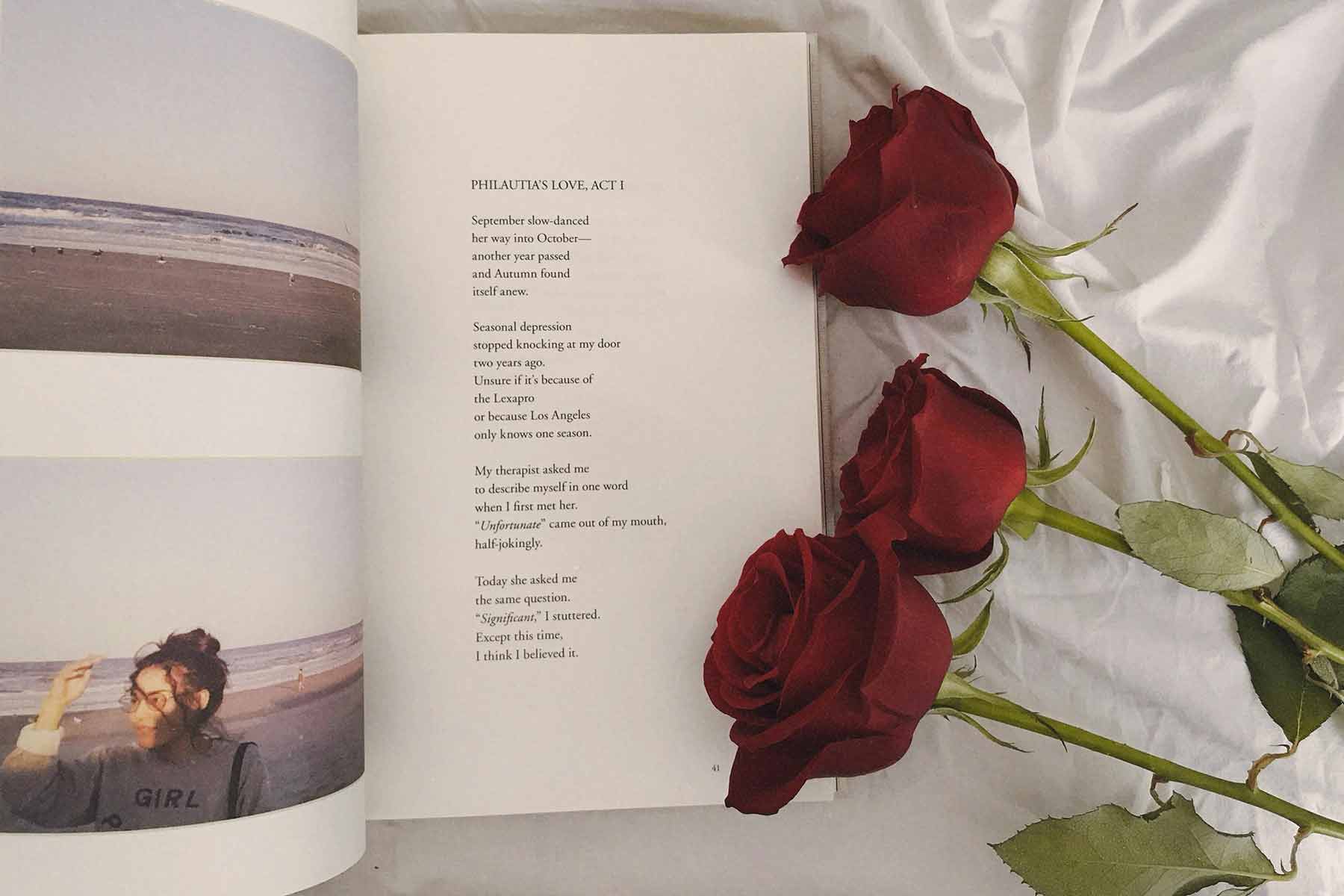
Symbolism uses objects, colors, or images to represent larger ideas. A rose might symbolize love, a dove might represent peace, and darkness often symbolizes fear or ignorance. Effective symbolism works on multiple levels. The symbol should function literally within the poem while also carrying deeper meaning that enriches the overall message.
Personification
Personification gives human qualities to non-human things. This device helps readers connect emotionally with ideas, objects, or forces of nature. By making them human-like, personification creates empathy and makes the abstract concrete.
Nature poetry frequently employs personification. Wind that "whispers," trees that "dance," and streams that "chatter" all bring the natural world to life through human characteristics.
Hyperbole
Hyperbole uses extreme exaggeration for emphasis or effect. When someone says "I'm so hungry I could eat a horse," they're using hyperbole to stress their hunger.
In poetry, hyperbole creates dramatic emphasis and can add humor or emotional intensity. It helps poets express feelings that normal language seems too small to contain. The key to effective hyperbole is intentional exaggeration. Readers should recognize the exaggeration as deliberate rather than confusing it with literal description.
Structural poetic devices and form
Structural devices control how poems are organized on the page and how they flow when read. These elements of poetry shape the reader's experience.
Stanza
Stanzas group lines together, similar to paragraphs in prose. They help organize thoughts and create visual breaks that guide readers through the poem. Stanza breaks signal shifts in thought, tone, or subject. They give readers natural pauses and help poets control pacing and emphasis throughout their work.
Common stanza forms include couplets (two lines), tercets (three lines), and quatrains (four lines). Each creates different rhythmic effects and organizational structures.
Enjambment and end-stopped lines
Enjambment occurs when a sentence or phrase continues from one line to the next without punctuation. This creates forward momentum and can mirror the flow of thought or speech.
End-stopped lines conclude with punctuation, creating natural pauses. The choice between enjambment and end-stopping affects how quickly or slowly the poem moves.
Mixing both techniques gives poets flexibility. They can use enjambment to build tension and end-stopping to create emphasis or provide moments of rest.
Repetition
Repetition deliberately repeats words, phrases, or lines for emphasis. Dylan Thomas famously used "Rage, rage against the dying of the light" twice in his villanelle.
This poetic device reinforces important ideas and creates rhythm. Repetition can build intensity, provide structure, or link different parts of a poem together. Strategic repetition distinguishes itself from redundancy by serving clear purpose. Each repetition should add meaning or emotional weight rather than simply restating.
Anaphora is a specific type of repetition where the same word or phrase is repeated at the beginning of successive lines.
Caesura
Caesura is a deliberate pause within a line of poetry, often marked by punctuation. Shakespeare's "To be, or not to be, that is the question" demonstrates caesura after "be." This pause creates dramatic effect and controls pacing. Caesuras can emphasize certain words, create contemplative moments, or mirror natural speech patterns.
Poets place caesuras strategically to shape how readers experience the poem. A well-placed pause can completely change a line's meaning or emotional impact.
Imagery and sensory devices
Imagery appeals to the five senses, creating vivid mental pictures. These devices help readers see, hear, smell, taste, and feel what the poem describes.
Visual imagery
Visual imagery paints pictures with words. When Ezra Pound wrote "Petals on a wet, black bough," readers can immediately visualize the scene he's describing.
Strong visual imagery includes specific details rather than vague descriptions. Concrete words create clearer pictures than abstract language, making poems more memorable and engaging. Color, light, and shadow all contribute to visual imagery. Poets use these elements to set mood, create atmosphere, and guide readers' emotional responses.

Sensory details
Beyond sight, poems can evoke sound, touch, taste, and smell. The more senses a poem engages, the more immersive and powerful the experience becomes.
Tactile imagery describes how things feel to touch. Temperature, texture, weight, and pressure all help readers physically connect with the poem's world. Taste and smell create particularly strong emotional responses because these senses link directly to memory. A simple sensory detail can evoke powerful associations.
Classic poetic forms
Traditional forms provide structure through specific rhyme schemes, meter, and patterns. These constraints can actually enhance creativity by providing a framework.
Sonnet
Sonnets contain 14 lines with specific rhyme schemes. Shakespeare's sonnets (ABAB CDCD EFEF GG) explore love, beauty, and mortality through this structured form. The sonnet's compact form demands precision. Every word must work harder when space is limited, leading to concentrated meaning and carefully crafted language.
Modern poets still write sonnets, sometimes following traditional rules strictly and other times bending them. The form remains relevant centuries after its creation.
Free verse
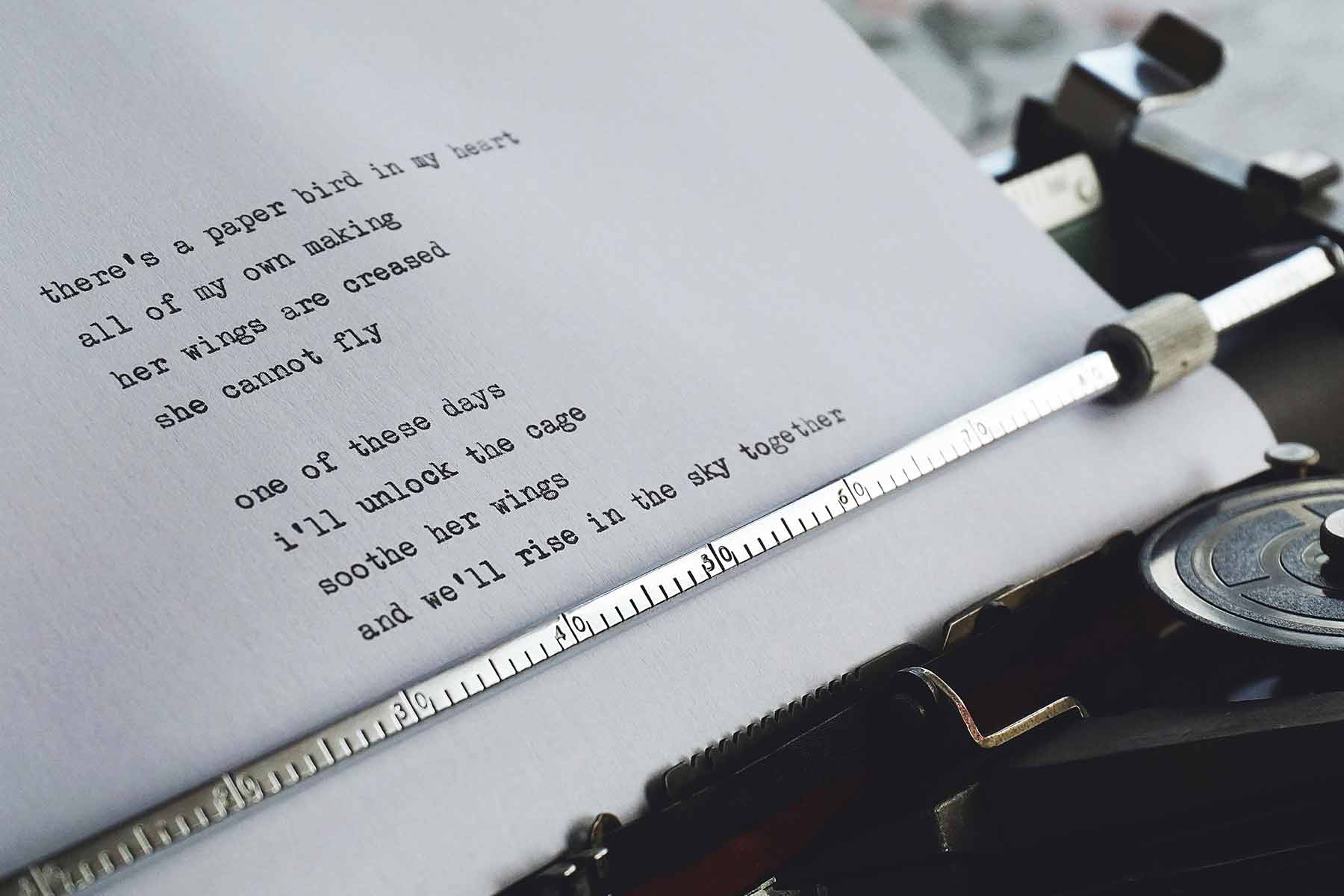
Free verse poetry removes requirements for rhyme and meter. This gives poets maximum flexibility to let content dictate form rather than fitting thoughts into predetermined patterns. Despite lacking formal structure, free verse still employs poetic devices. Line breaks, imagery, and other techniques create artfulness even without traditional constraints.
Free verse dominates contemporary poetry. It allows poets to capture natural speech rhythms and thoughts without the artificial feeling that strict forms sometimes create.
How to identify poetic devices in poems
Spotting poetic devices becomes easier with practice. Follow these tips:
Start by reading poems aloud. Sound devices become much more obvious when you hear them.
Look for comparisons using "like," "as," or "is." These signal similes and metaphors, two of the most common figurative devices you'll encounter.
Notice patterns in sound, structure, or word choice. Repeated sounds might indicate alliteration or assonance. Repeated words or phrases point to intentional repetition as a device.
Pay attention to images that engage your senses. If you can see, hear, or feel what the poem describes, the poet has successfully employed imagery.
Using poetic devices in your own writing
Start by mastering one or two poetic devices rather than trying to use everything at once. A poem with strong imagery and one well-crafted metaphor beats one that clumsily attempts ten different techniques.
Read widely to see how published poets employ these tools. Notice which devices appear most frequently and how masters of the craft combine them effectively.
Revise with poetic devices in mind. Your first draft captures ideas; later drafts polish language and add layers through strategic use of poetic techniques.
Remember: devices serve the poem, not the other way around. Don't force a metaphor or alliteration if it doesn't enhance meaning or beauty.
Common mistakes to avoid
Overusing any single device makes poems feel gimmicky. Too much alliteration sounds forced, while excessive metaphors can confuse rather than clarify.
Mixing metaphors creates confusion. If you start comparing love to a rose, don't suddenly shift to comparing it to a storm in the same passage.
Neglecting meaning in favor of sound is another pitfall. Poetry should balance musicality with substance.
Using clichéd images and comparisons weakens poetry. "Red as a rose" and "white as snow" have been done countless times. Find fresh ways to express ideas.
Using our proprietary cost database, in-depth research, and collaboration with industry experts, we deliver accurate, up-to-date pricing and insights you can trust, every time.