
Important Historical Events That Changed the World
Important Historical Events That Changed the World

The most important events in history
Throughout history, certain moments stand out as turning points that transformed societies, sparked revolutions, and altered the course of civilizations. From ancient empires falling to technological breakthroughs that connected the world, these influential historical events continue to impact our daily lives. This comprehensive guide explores the most important events that shaped our modern world.
| Important historical events | Time period | Global impact |
|---|---|---|
| Fall of Western Roman Empire | 476 AD | Ended imperial rule; enabled feudalism and Christianity's rise; reshaped European governance |
| Signing of Magna Carta | 1215 | Established rule of law principles; limited monarchical power; influenced modern democracy |
| Invention of printing press Fall of Constantinople |
1440s–1453 | Democratized knowledge; sparked Renaissance and Reformation; altered trade routes |
| Discovery of the Americas | 1492 | Initiated Columbian Exchange; reshaped global power; connected hemispheres |
| Protestant Reformation American Revolution |
1517–1783 | Challenged religious authority; established democratic principles; inspired global movements |
| French Revolution Industrial Revolution |
1760–1840 | Transformed economic systems; spread democratic ideals; modernized production |
| Abolition of slavery Napoleonic Wars |
1803–1815 | Advanced human rights; reshaped European borders; spread revolutionary ideals |
| World War I World War II |
1914–1945 | Reshaped global order; ended empires; introduced atomic age; established international institutions |
| Cold War Civil Rights Movement |
1945–1960s | Divided world ideologically; advanced equality; transformed social structures |
| Fall of Berlin Wall Internet revolution |
1989–1990s | Ended communism in Europe; connected global population; transformed communication |
The fall of the Western Roman Empire (476 AD)
When Germanic king Odoacer deposed the last Roman emperor in 476 AD, it marked one of the most dramatic shifts in European history. After more than 1,000 years of Roman dominance, the Western Empire finally collapsed, changing Europe's political landscape forever.
The Romans had controlled most of the European continent, creating systems of law, infrastructure, and governance that defined Western civilization. But the empire crumbled under multiple pressures: unstable leadership, economic troubles, military forces stretched too thin, and dwindling public support. When Rome fell, it left a massive power vacuum across Europe.
Christianity stepped into this void, with the Catholic Church's influence expanding dramatically across the continent. This shift from imperial rule to feudal systems and religious authority shaped medieval Europe. Without Rome's fall, we wouldn't have the European nations we know today.
The signing of the Magna Carta (1215)
The Magna Carta introduced ideas that still protect your rights today. In 1215, English barons had enough of King John's heavy taxes and military failures, so they forced him to sign a charter limiting his power.
This was revolutionary thinking for its time. The Magna Carta established that even kings had to follow the law; nobody, no matter how powerful, was above it. It guaranteed basic rights like fair trials and protection from arbitrary imprisonment, concepts that seem obvious to us now but were radical then.
The document's influence stretches far beyond medieval England. The Founding Fathers drew heavily on its principles when crafting the U.S. Constitution and Bill of Rights. Today's democratic societies worldwide still rely on the Magna Carta's core ideas about rule of law and individual rights.
The invention of the printing press (1440s)
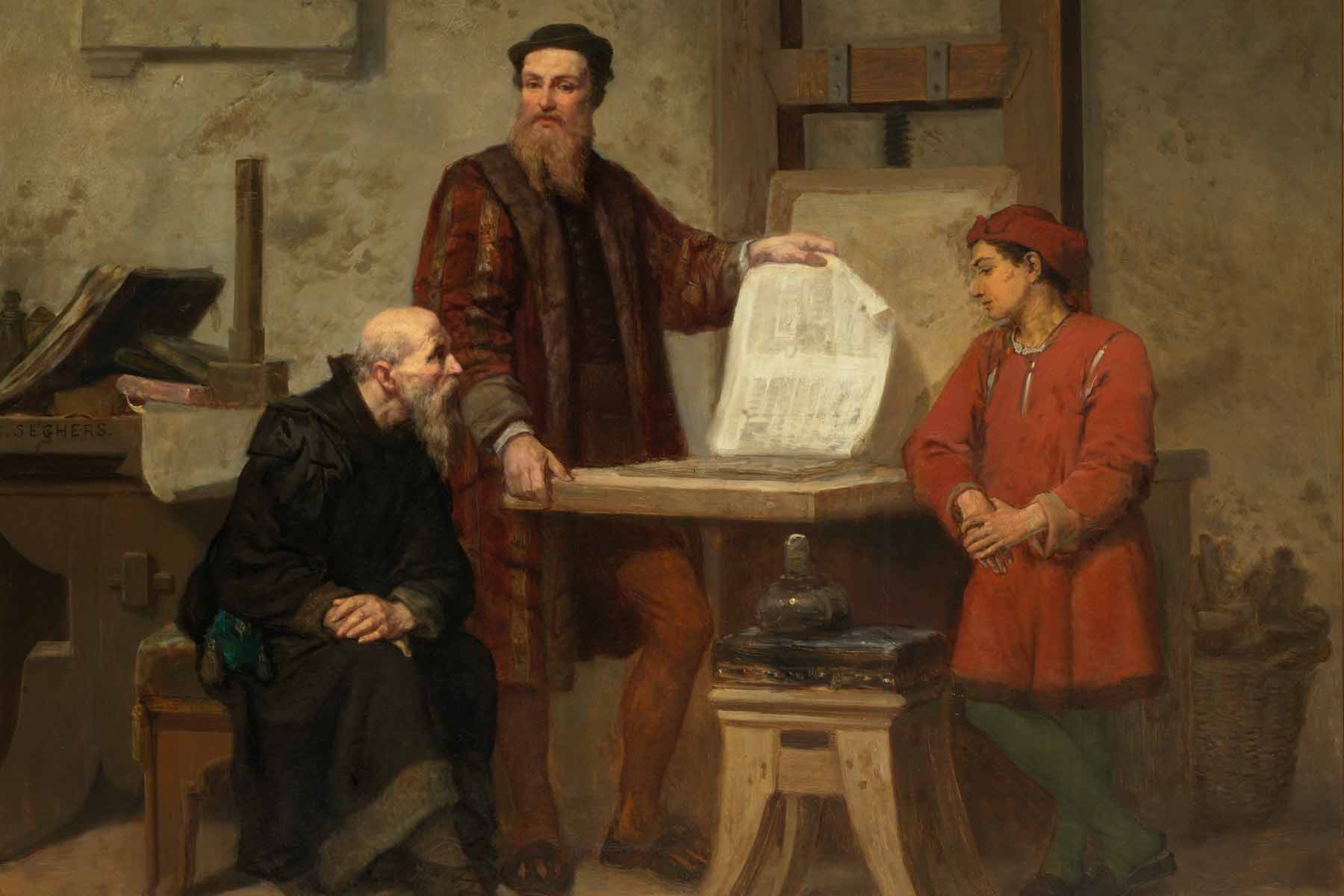
Johannes Gutenberg's printing press invention in the 1440s might just be the most game-changing innovation in human history. Before this breakthrough, books were painstakingly hand-copied by monks and scribes, making them incredibly expensive and rare. Compared to hand-copying, a single printing press could produce an extraordinary number of pages each day.
The impact was immediate and revolutionary. By 1500, printing presses across Western Europe had produced over 20 million books. The cost of books plummeted, literacy rates skyrocketed, and knowledge became accessible to ordinary people instead of just wealthy elites and clergy.
This technology supercharged major historical movements. Martin Luther's Protestant Reformation spread like wildfire thanks to printed pamphlets, with 300,000 copies of his writings circulated between 1518 and 1524 alone. The printing press also fueled the Renaissance and Scientific Revolution by letting scholars share discoveries and build on each other's work in ways that were never possible before.
The fall of Constantinople (1453)
The Ottoman Empire's conquest of Constantinople in 1453 sent shockwaves through the known world. For over 1,000 years, this city had been the heart of the Byzantine Empire and a crucial trading hub connecting Europe and Asia. When Sultan Mehmed II captured it, everything changed.
The Ottomans suddenly controlled the most important trade routes between East and West. European merchants and rulers panicked because they needed new ways to reach Asia's valuable spices and goods. This crisis directly sparked the Age of Exploration, pushing explorers like Christopher Columbus and Vasco da Gama to find alternative sea routes.
There was an unexpected bonus too. Byzantine scholars fleeing the conquered city brought classical Greek and Roman texts with them to Western Europe. These ancient works helped fuel the Renaissance, giving European thinkers access to knowledge that had been preserved in Constantinople's libraries for centuries.
The discovery of the Americas (1492)
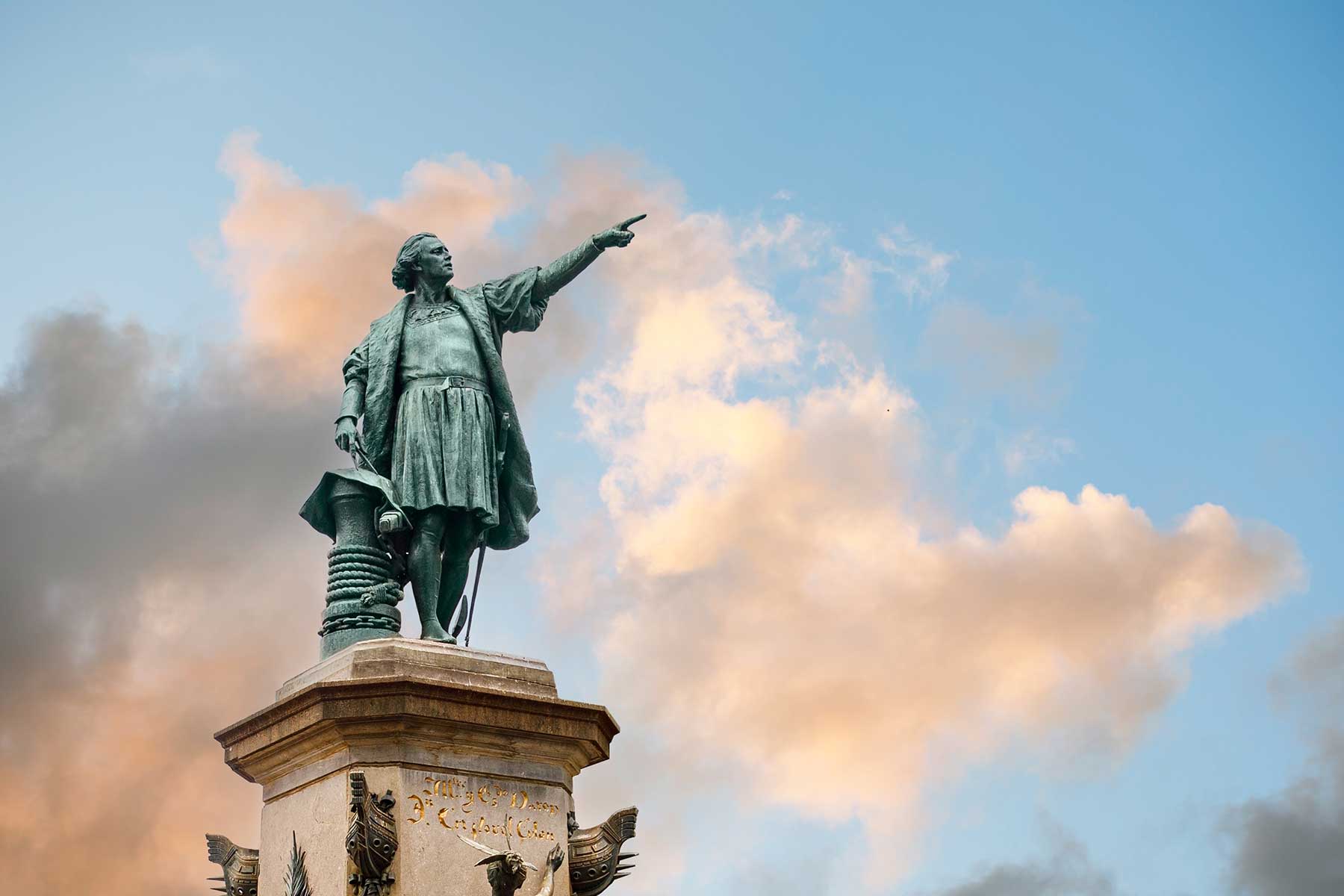
Christopher Columbus probably had no idea he was about to change world history when he set sail in 1492. Commissioned by Spanish monarchs to find a western route to Asia, he instead stumbled upon the Americas, beginning one of the most consequential encounters in human history.
This "discovery" triggered what historians call the Columbian Exchange, an unprecedented transfer of plants, animals, diseases, and technologies between the Old and New Worlds. European crops like wheat and livestock like horses transformed Indigenous American societies, while American crops like potatoes, tomatoes, and corn revolutionized European agriculture and diets.
However, the exchange wasn't all positive. European diseases like smallpox and measles devastated Native American populations who had no immunity.
Meanwhile, the influx of wealth from the Americas to Europe fueled centuries of colonization that reshaped global power structures and established patterns that still influence international relations today.
The Protestant Reformation (1517)
When Martin Luther nailed his 95 Theses to a church door in 1517, he probably didn't expect to split Christianity forever. But that's exactly what happened when his criticisms of Catholic Church practices sparked the Protestant Reformation.
Luther was particularly upset about the sale of indulgences, or the church charging people to reduce punishment for sins. His ideas resonated with widespread frustration about church corruption and abuse of power. Thanks to the printing press, Luther's writings spread across Europe, reaching hundreds of thousands of people.
The Reformation had consequences far beyond religion. Protestant emphasis on personal Bible reading boosted literacy rates. As rulers broke from papal authority, it contributed to the rise of modern nation-states. The movement also laid groundwork for religious pluralism and the idea that individuals should follow their own conscience in matters of faith.
The Industrial Revolution (1760-1840)
The Industrial Revolution dramatically transformed human life. Starting in Britain around 1760, this era brought unprecedented advances in manufacturing, agriculture, transportation, and technology that changed how people lived and worked.
Steam engines, mechanized textile production, iron casting, and railway systems revolutionized daily life. Suddenly, goods could be mass-produced, agricultural output increased significantly, and people and products could travel long distances efficiently. Populations shifted from rural farms to bustling cities as new economic systems emerged.
Life got better for many people. More food, medicine, and goods became available to growing populations. But the Industrial Revolution also created new problems like urban overcrowding, worker exploitation, and environmental damage. These changes launched subsequent technological revolutions that continue to reshape our world today.
The American Revolution (1775-1783)
The American Revolution proved something that seemed impossible at the time: colonies could successfully break away from powerful empires and govern themselves. The Declaration of Independence in 1776 articulated revolutionary ideas about natural rights, popular sovereignty, and the right to self-determination that challenged the existing world order.
The success of the United States demonstrated that Enlightenment ideals about democracy and individual liberty weren't just theoretical—they could actually work in practice. The Constitution created a system of checks and balances, federalism, and protected rights that became a model for democratic movements worldwide.
The Revolution's influence spread far beyond American shores. It directly inspired the French Revolution and independence movements throughout Latin America. By proving that monarchical systems could be overthrown and replaced with democratic governments, it shifted global power dynamics and established principles that continue influencing political movements today.
The French Revolution (1789-1799)
The French Revolution radically transformed France and sent shockwaves throughout Europe that challenged centuries of monarchical rule. Starting in 1789, French citizens rose up against their monarchy, executed King Louis XVI, and attempted to build a republic based on Enlightenment principles.
The Revolution introduced new concepts like universal male suffrage, secular government, and equality before the law. The Declaration of the Rights of Man and of the Citizen articulated principles of liberty, equality, and fraternity that became foundational to modern democratic thought. Feudalism and aristocratic privileges were swept away, fundamentally restructuring French society.
Although the Revolution descended into violence during the Reign of Terror and eventually led to Napoleon's rise, its ideals spread across Europe. It inspired democratic and nationalist movements for decades, challenged traditional authority structures, and established principles of popular sovereignty that continue shaping political thought worldwide.
The Napoleonic Wars (1803-1815)
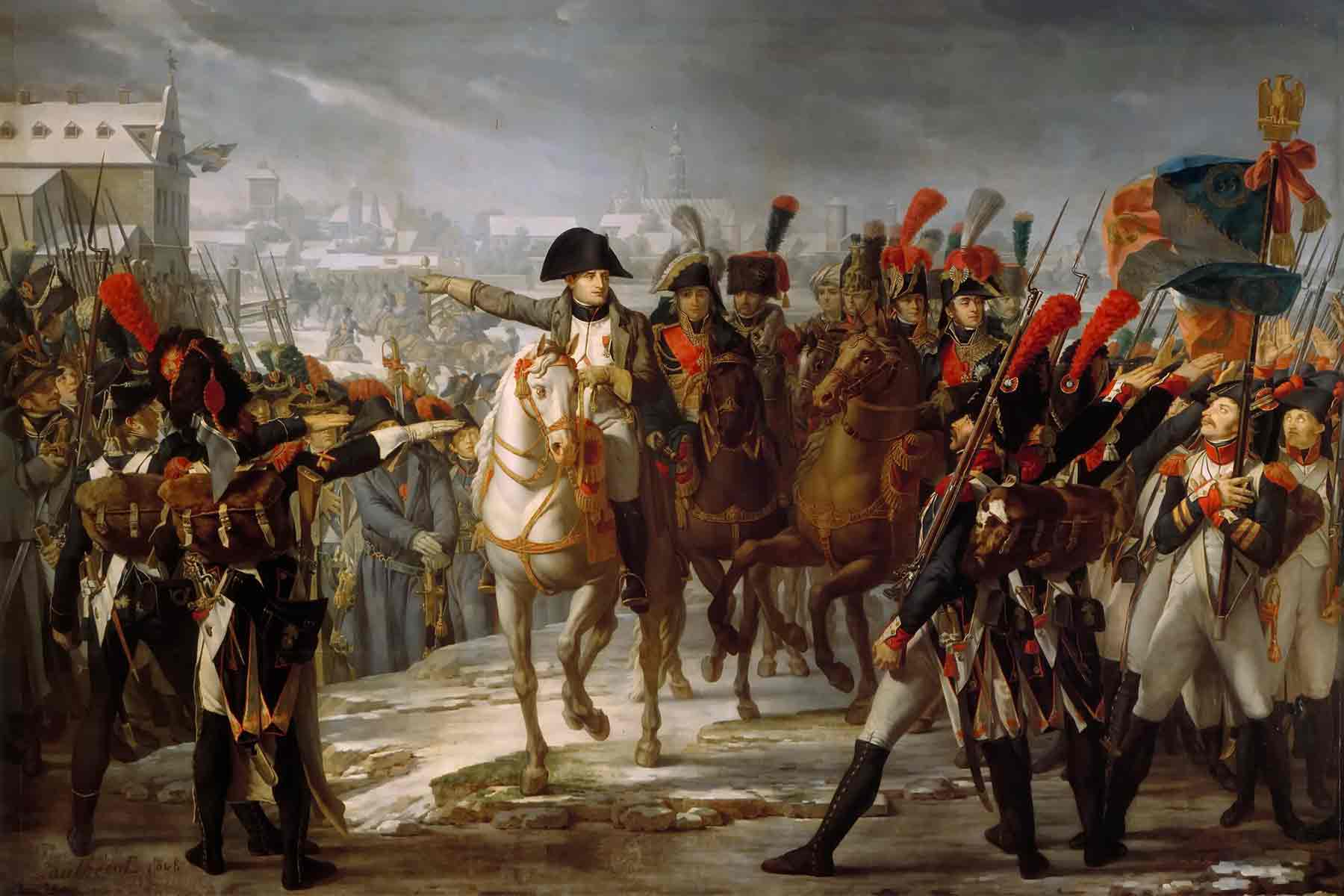
Napoleon Bonaparte's military campaigns reshaped Europe's political map and spread revolutionary ideals across the continent. As French armies conquered much of Europe, they brought legal reforms, abolished feudalism, and established merit-based systems wherever they went.
Napoleon's Civil Code standardized laws across territories, promoting legal equality and property rights that outlasted his empire. His administrative reforms modernized government systems while his wars weakened traditional European monarchies. The conflicts also sparked nationalist movements as conquered peoples developed stronger national identities.
Even after Napoleon's defeat, the ideas and changes he spread continued influencing European politics throughout the 19th century. The Congress of Vienna tried to restore the old order, but the nationalist sentiments and liberal ideals unleashed during the Napoleonic era eventually contributed to the formation of modern European nation-states.
The abolition of slavery (19th century)
The global movement to end slavery represents one of humanity's greatest moral achievements. Britain abolished the slave trade in 1807 and slavery throughout its empire in 1833. The United States ended slavery with the 13th Amendment in 1865 after the Civil War, while Brazil became the last nation in the Americas to abolish it in 1888.
This represented a fundamental shift in how people thought about human rights. For thousands of years, slavery had been accepted across most cultures, but growing moral objections led to organized campaigns demanding its elimination.
Abolitionists argued that all humans possessed inherent dignity and deserved freedom, directly challenging economic systems built on human bondage. The abolition movement established principles of universal human rights and demonstrated that even deeply entrenched social practices could be challenged and changed through sustained moral and political pressure.
World War I (1914-1918)
World War I shattered the old European order and ushered in the modern era with unprecedented destruction. The assassination of Archduke Franz Ferdinand in 1914 triggered a conflict that drew in major world powers, resulting in over 17 million deaths. New technologies like tanks, chemical weapons, and aircraft turned warfare into industrial-scale slaughter.
The war's aftermath redrew Europe's map. The Austro-Hungarian, Ottoman, German, and Russian empires collapsed and were replaced by new nation-states. The harsh Treaty of Versailles imposed on Germany created conditions that would contribute to World War II just two decades later.
The war accelerated social changes including women's suffrage and labor rights movements. It shattered optimistic pre-war attitudes about progress and civilization, introducing widespread disillusionment that characterized the troubled interwar period. The conflict fundamentally altered how people viewed warfare, nationalism, and international relations.
World War II (1939-1945)
World War II remains the deadliest conflict in human history, claiming over 70 million lives and completely reshaping the global order. The war saw unprecedented horrors including the Holocaust, where Nazi Germany systematically murdered six million Jews and millions of others, and the development and use of atomic bombs on Japanese cities.
The war's conclusion established the United States and Soviet Union as rival superpowers, setting the stage for the decades-long Cold War. Weakened European powers could no longer maintain their vast empires, leading to decolonization that altered the maps of Africa and Asia. The United Nations was established to promote international cooperation and prevent future global conflicts.
Technological advances during the war—from radar to computers to nuclear technology—transformed civilian life in subsequent decades. The war's horrors also led to international human rights declarations and ongoing efforts to prevent genocide. Its impact on global politics, technology, and human rights continues shaping our world today.
The atomic age and Cold War (1945-1991)
The development of nuclear weapons during World War II launched the atomic age, fundamentally changing international relations and introducing existential threats to humanity. The Manhattan Project proved that humans could create weapons capable of destroying civilization, completely altering strategic thinking about warfare and diplomacy.
For nearly five decades, the Cold War between the United States and Soviet Union dominated global politics. This ideological struggle between capitalism and communism influenced conflicts worldwide, from Korea to Vietnam to proxy battles across Africa and Latin America. Both superpowers accumulated nuclear arsenals capable of destroying the world multiple times over.
The rivalry also produced remarkable achievements like the space race, culminating in the 1969 moon landing. The Cold War finally ended with the fall of the Berlin Wall in 1989 and the Soviet Union's collapse in 1991, reshaping global power dynamics and ending decades of ideological conflict.
The civil rights movement (1950s-1960s)
The American civil rights movement challenged racial segregation and discrimination, achieving victories that transformed not just American society but inspired justice movements worldwide. Leaders like Martin Luther King Jr., Rosa Parks, and Malcolm X led campaigns of civil disobedience, protests, and legal challenges that exposed the deep injustice of segregation.
The movement's major victories included the Civil Rights Act of 1964, outlawing discrimination based on race, color, religion, sex, or national origin, and the Voting Rights Act of 1965, protecting voting rights for minorities. These legislative achievements dismantled legal segregation and expanded democratic participation for millions of Americans.
The movement's success inspired similar struggles around the world, from anti-apartheid campaigns in South Africa to indigenous rights movements in Latin America. It established strategies of nonviolent resistance that influenced countless subsequent social movements and advanced the principle that all people deserve equal rights and dignity regardless of race.
The fall of the Berlin Wall (1989)
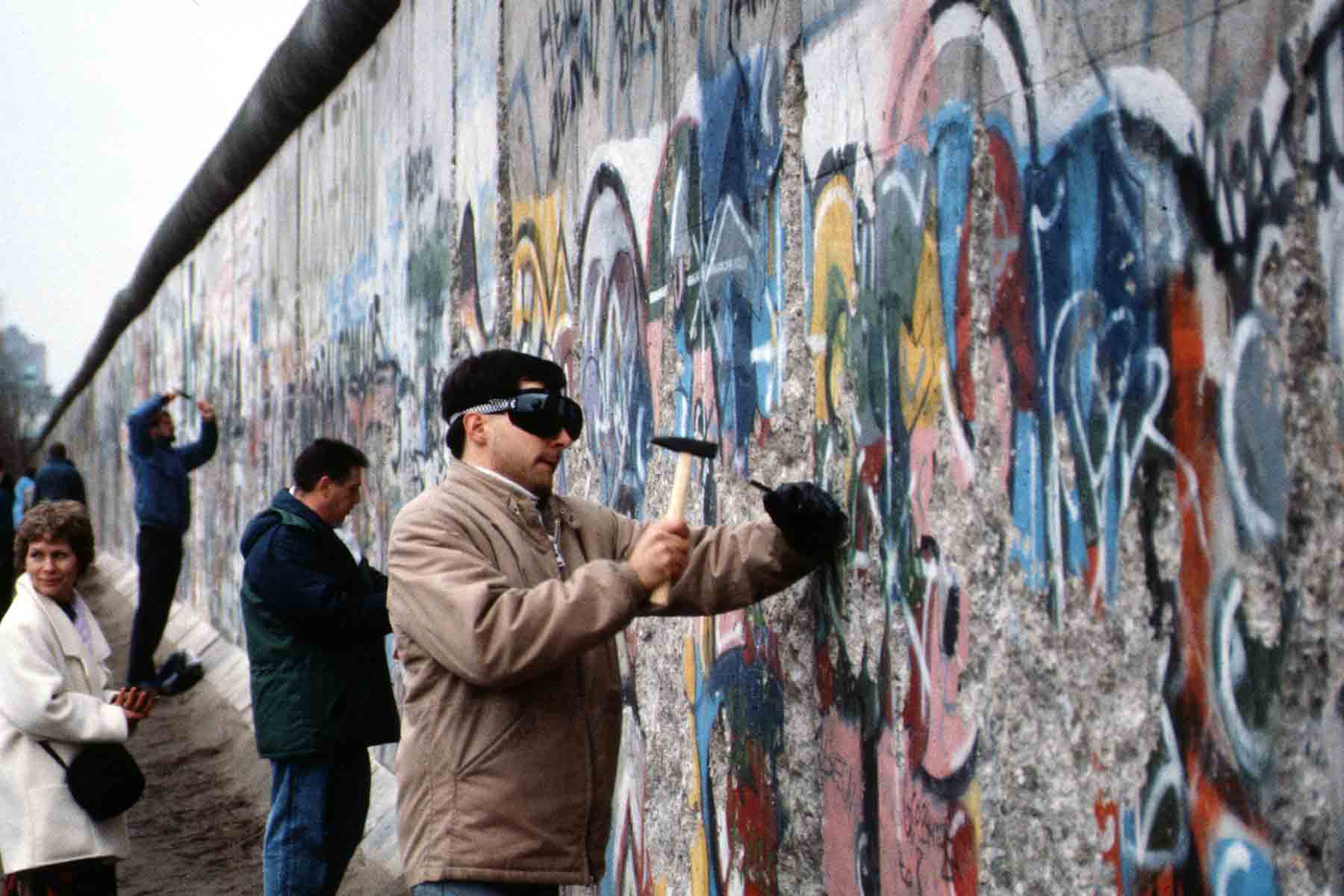
The fall of the Berlin Wall on November 9, 1989, became one of the most powerful symbols of freedom's triumph over oppression. Built in 1961 to divide East and West Berlin, the wall represented the ideological divide between Soviet-controlled Eastern Bloc nations and the democratic West.
When East Germany finally opened its borders, jubilant crowds attacked the wall with hammers and pickaxes, reuniting families separated for decades. This dramatic moment marked the beginning of the Soviet Union's dissolution, which formally occurred in 1991. Eastern European nations transitioned from communist dictatorships to democratic systems, fundamentally altering Europe's political landscape.
German reunification in 1990 created Europe's largest economy and shifted continental power dynamics. Former Soviet satellites joined NATO and the European Union, expanding Western democratic institutions eastward. The wall's fall remains a powerful reminder that even the most oppressive systems can crumble when people demand freedom.
The internet revolution (1990s-present)
The development and widespread adoption of the internet represents one of the most transformative events in human history. Tim Berners-Lee's creation of the World Wide Web in 1989, made freely available in 1993, revolutionized how people communicate, access information, and conduct business.
The internet democratized access to information on an unprecedented scale. Suddenly, knowledge once confined to libraries and universities became available to anyone with an internet connection. It transformed entire industries, from retail to entertainment to education, and created new forms of social interaction through social media platforms.
The digital revolution continues evolving rapidly, with mobile technology, artificial intelligence, and social media reshaping society in profound ways. While the internet enables unprecedented global connectivity and innovation, it also introduces new challenges, including privacy concerns, misinformation, and digital inequality. Its impact on human civilization is still unfolding as technology continues to advance at breakneck speed.
How to find the best history tutor near you
If you're looking to deepen your understanding of these world-changing events or need help improving your history grades and test scores, working with a qualified history tutor can make a significant difference. Follow these tips to find the best history tutor:
Read reviews of tutors from past clients on Lessons.com.
Look for tutors who specialize in your specific needs, whether that's AP History, college coursework, or standardized test prep.
Check their educational background and teaching experience in history or related fields.
Ask about their teaching methods to ensure they match your learning style.
Request references or reviews from previous students and parents.
Start with a trial session to evaluate compatibility and teaching effectiveness.
Consider both in-person and online options to find the best fit for your schedule and budget.
Questions to ask a history tutor
Before hiring a history tutor, ask these important questions to ensure they're the right fit:
What is your educational background and experience teaching history?
Which historical periods and topics are you most knowledgeable about?
How do you help students improve their analytical writing and critical thinking skills?
What materials and resources do you use during tutoring sessions?
How do you track student progress and communicate with parents?
What is your experience with my specific course or test preparation needs?
Can you provide references from recent students or parents?
What are your rates and cancellation policies?
Using our proprietary cost database, in-depth research, and collaboration with industry experts, we deliver accurate, up-to-date pricing and insights you can trust, every time.