
Vatican City History: What Is the Vatican and When Was It Built?
Vatican City History: What Is the Vatican and When Was It Built?

What is the Vatican?
Vatican City is the world's smallest country, covering just 0.17 square miles. Despite its size, it operates as a fully independent nation with its own government, postal system, and even a small military force. The Vatican serves as the spiritual heart of the Catholic Church and the seat of its worldwide leadership.
Although Vatican City only became an independent state in 1929, its religious and historical roots stretch back nearly 2,000 years. Today it combines sacred spaces, priceless art, and political influence within just 109 acres.
Vatican history timeline
37 – 41 AD: Emperor Caligula builds the Circus Vaticanus, a chariot racing venue on Vatican Hill.
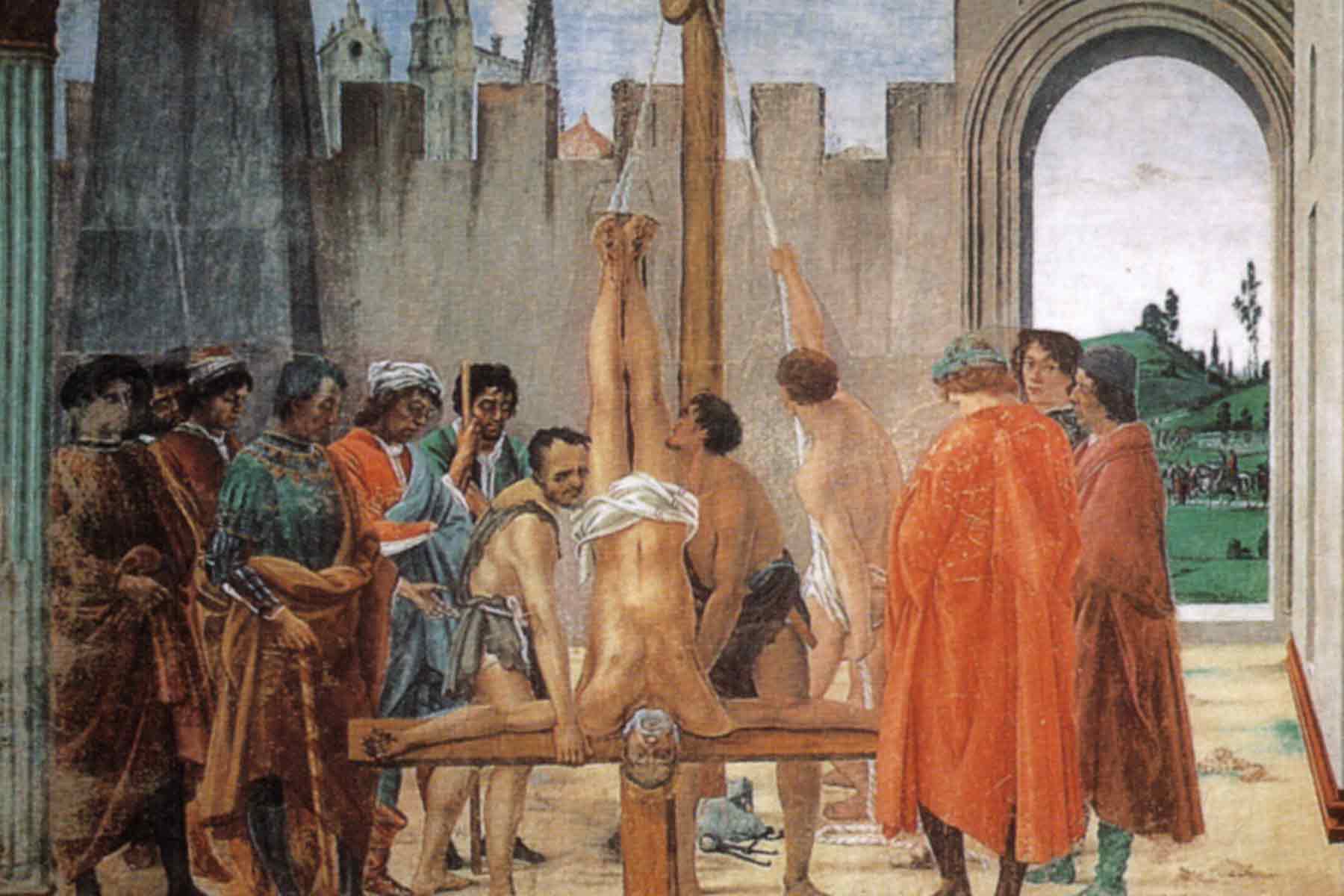
64 AD: Saint Peter is martyred during Nero's persecution and buried in a necropolis near the circus.
324 AD: Emperor Constantine completes the first St. Peter's Basilica directly over Peter's tomb.
754 AD: King Pepin the Short donates land to the pope, forming the foundation of the Papal States.
1177: The Treaty of Venice grants the Papal States independence from the Holy Roman Empire.
1377 AD: The papacy returns to Rome from France, making the Vatican the primary papal residence.
1447 AD: Pope Nicholas V begins major renovations, signaling the start of the Renaissance in Rome.
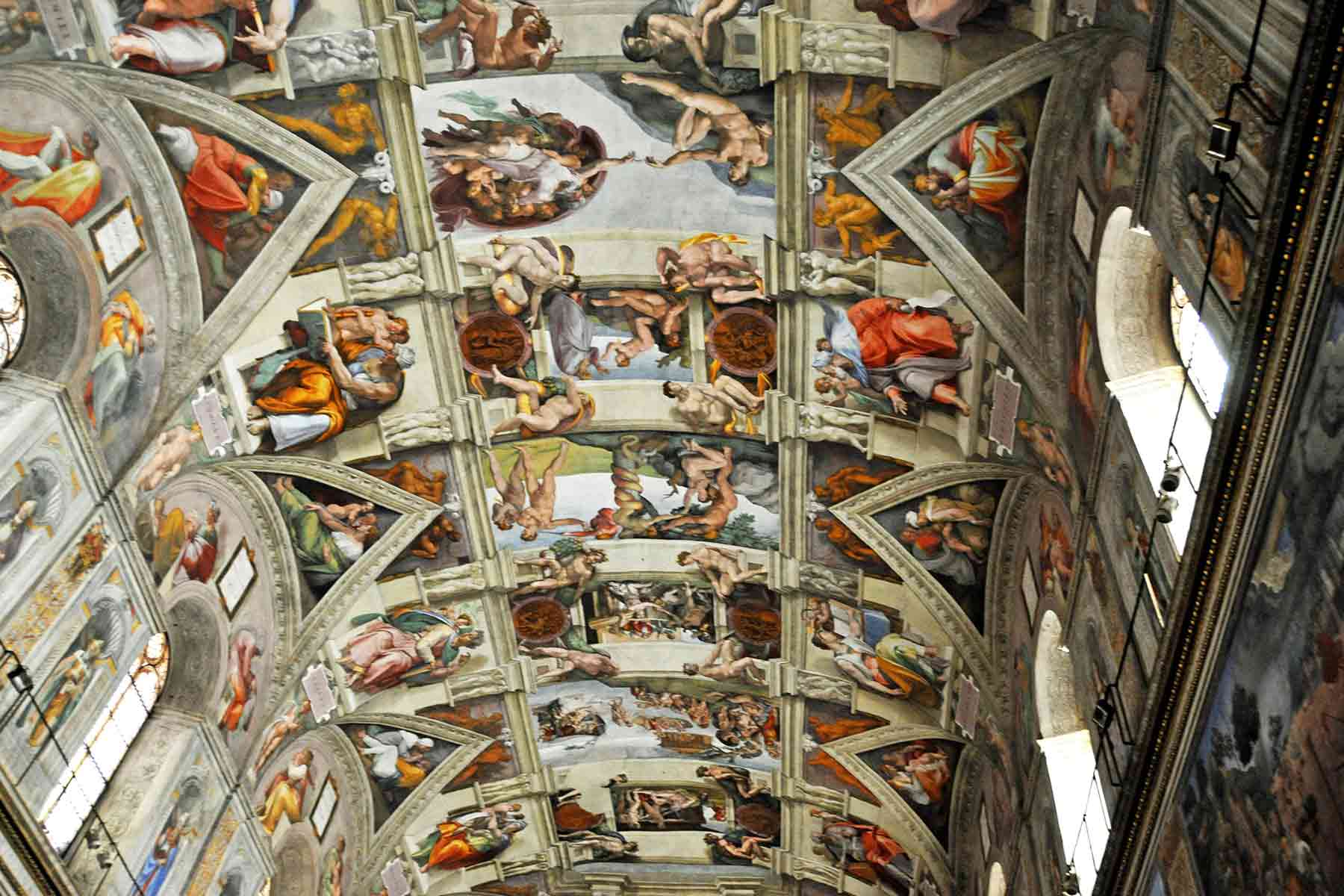
1473 AD: Construction begins on the Sistine Chapel, completed in 1481 AD.
1506 AD: Construction begins on the new St. Peter's Basilica, replacing the ancient Constantinian structure.
1870 AD: Italy annexes Rome, dissolving the Papal States.
1929 AD: The Lateran Treaty establishes Vatican City as an independent sovereign state.
Ancient origins: When was the Vatican first built?
During the Roman Republic, Vatican Hill was a marshy plain west of the Tiber River, sitting just outside the city's boundaries. By the first century AD, this area had transformed into a fashionable retreat. Rome's wealthy citizens built villas and gardens on Vatican Hill, enjoying its peaceful atmosphere.
Emperor Caligula constructed the Circus Vaticanus here around 37 to 41 AD. This massive chariot-racing stadium would later become infamous as a site of Christian persecution under Emperor Nero.
Saint Peter's burial site
In 64 AD, Saint Peter was crucified in or near this circus. Christians buried his body in a nearby necropolis, a decision that would shape the location's destiny for millennia to come.
Archaeological excavations beneath St. Peter's Basilica have confirmed the existence of this ancient burial ground. Researchers found elaborate tombs and evidence of early Christian worship at Peter's gravesite.
Constantine's basilica: The first major Vatican construction
When Emperor Constantine legalized Christianity in 313 AD, everything changed for Vatican Hill. Constantine decided to honor Saint Peter by building a grand basilica directly over his tomb.
Construction of this first St. Peter's Basilica began around 319 to 322 AD and was completed by 324 AD. Engineers had to level part of Vatican Hill and fill in parts of the necropolis to create a stable foundation.
Constantine's basilica stood for over 1,200 years and became a symbol of Christianity's triumph over persecution. Popes were crowned here, councils were held, and the faithful gathered to celebrate major feast days.
The medieval Vatican and the Papal States
After the Western Roman Empire collapsed in 476 AD, the popes gradually assumed both spiritual and temporal authority. Vatican Hill evolved from a pilgrimage site into a center of political power.
Pope Symmachus built the first papal palace near St. Peter's Basilica at the end of the 5th century. Throughout the Middle Ages, kings, nobles, and wealthy believers made donations of land and treasure.
These donations created the Papal States, a band of territory across central Italy under direct papal rule. The pope now controlled not just spiritual matters but armies, courts, and tax collection. The 1177 Treaty of Venice formally recognized the Papal States' independence from the Holy Roman Empire.
| Region | Location | Role in the Papal States |
|---|---|---|
| Rome | Central Italy | The capital and spiritual heart of the territory |
| Romagna | Northern Italy | A rich agricultural region providing food and tax revenue |
| Umbria | Central Italy | Strategic defense zone with hilltop fortresses |
| Marche | Adriatic Coast | Controlled trade routes and ports like Ancona |
| Benevento | Southern Italy | An enclave within the Kingdom of Naples |
The Vatican during the Renaissance
The Renaissance brought dramatic changes to the Vatican. Popes became great patrons of art and architecture, commissioning works that still dazzle visitors today. Pope Sixtus IV commissioned the Sistine Chapel between 1477 and 1480. Leading Renaissance artists including Botticelli and Perugino painted the chapel's walls with biblical scenes.
To raise funds for these projects, the Church increased the sale of indulgences — payments that supposedly reduced time in purgatory. This practice helped to spark the Protestant Reformation.
Rebuilding St. Peter's Basilica
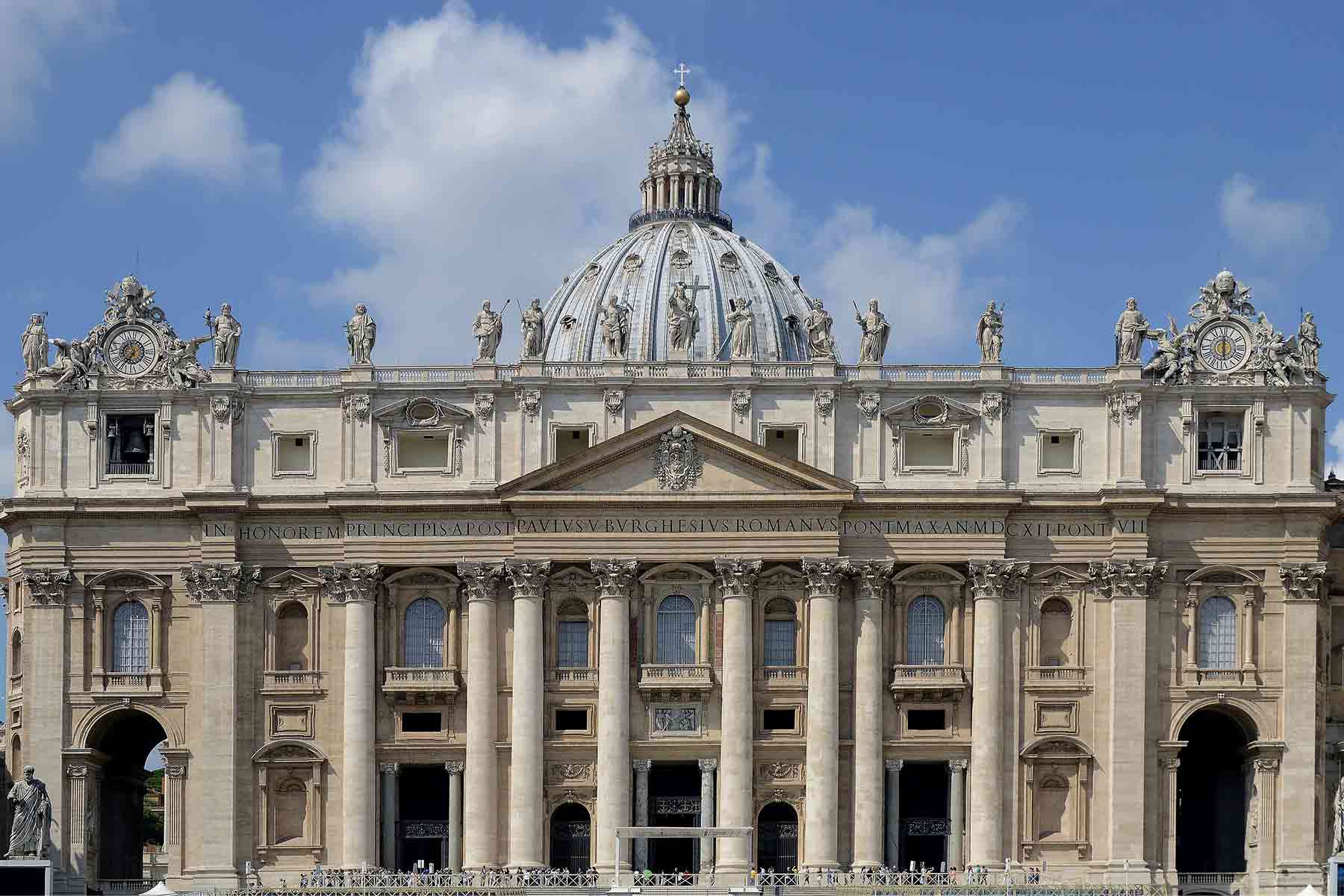
The decision to rebuild St. Peter's Basilica came under Pope Julius II in 1506. He hired architect Donato Bramante to design a grand new church worthy of Christianity's most important martyr.
Construction dragged on for 120 years. A succession of architects, including Raphael and Michelangelo, each contributed to the design. Michelangelo engineered the massive dome that still dominates Rome's skyline.
Pope Urban VIII finally consecrated the completed basilica on 1626. The result was a church that could hold 60,000 people under the world's tallest dome.
The fall of the Papal States
The French Revolution brought catastrophe to papal power. In February 1798, French troops marched into Rome, arrested Pope Pius VI, and confiscated church property.
Napoleon crowned himself Emperor in 1804 and gradually absorbed the Papal States into his empire. Napoleon's defeat at Waterloo in 1815 allowed restoration of the Papal States, though papal power had been permanently weakened.
One by one, Italian states joined the new kingdom. By 1860, the Papal States had been reduced to just Rome and the surrounding Lazio region. On September 20, 1870, Italian troops breached Rome's walls. Pope Pius IX ordered his forces to surrender. Rome was declared the capital of unified Italy.
The pope retreated to the Vatican, declaring himself a "prisoner" and refusing to recognize Italian authority. This standoff became known as the "Roman Question." For nearly 60 years, popes refused to leave the Vatican grounds or recognize the Italian state.
The Lateran Treaty: The birth of modern Vatican City
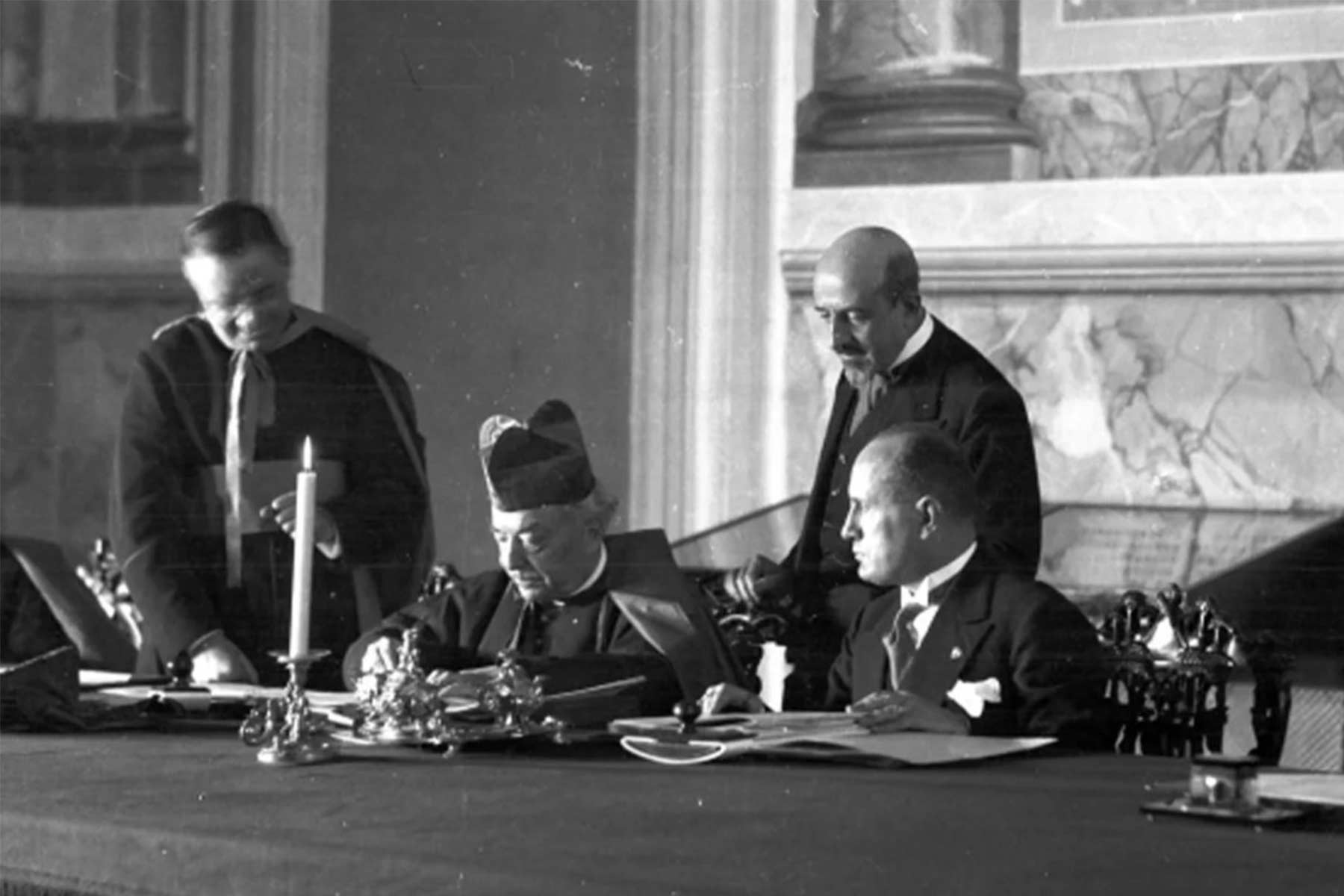
On February 11, 1929. Pope Pius XI and Italian dictator Benito Mussolini signed the Lateran Treaty recognizing Vatican City as a fully independent sovereign state under papal rule. It paid the Holy See financial compensation for lost territories and made Catholicism Italy's state religion.
Vatican City's borders were carefully defined. The new nation included St. Peter's Basilica, the Vatican Palace, Vatican Museums, gardens, and several buildings. The total area was just 109 acres.
In exchange, the pope recognized the Kingdom of Italy and renounced claims to the former Papal States. The papacy could finally focus on spiritual leadership rather than territorial disputes.
The Vatican today
Modern Vatican City remains the world's smallest country but maintains outsized global influence. Over one billion Catholics worldwide look to the pope for spiritual guidance.
Vatican City has about 800 residents, mostly clergy and Swiss Guards. The tiny nation prints its own stamps, mints coins, issues its own passports and license plates, and operates a pharmacy and supermarket.
The Vatican remains financially independent through investments, donations from Catholics worldwide, and revenue from Vatican Museums. Millions of tourists visit annually, making the museums a significant source of income.
Vatican City facts and statistics
Vatican City's unique status produces some fascinating statistics:
As the world's smallest country, it covers just 0.17 square miles, about one-eighth the size of New York's Central Park.
The land is valued at approximately $1.35 billion per square mile, making it possibly the most valuable real estate on earth.
The Vatican has the world's smallest population, with about 800 residents and roughly 450 citizens. Citizenship is granted based on employment rather than birth.
St. Peter's Basilica draws over six million visitors annually. The church can accommodate 60,000 people and features Michelangelo's dome, which rises 448 feet above the floor.
The Vatican Museums contain approximately 70,000 works of art, though only about 20,000 are on display. The museums attract more than six million visitors each year.
The Swiss Guard, founded in 1506, serves as the pope's military force. These colorful guards number about 135 and must be Swiss Catholic men between 19 and 30 years old.
Visiting the Vatican
Planning a visit to the Vatican requires some preparation. The site attracts enormous crowds, especially during peak tourist season from April through October. Allow at least three to four hours for a basic Vatican visit. Serious art enthusiasts could easily spend an entire day exploring the museums.
Book tickets in advance for the Vatican Museums and Sistine Chapel. Lines for same-day tickets can stretch for hours. Many visitors opt for guided tours that provide skip-the-line access.
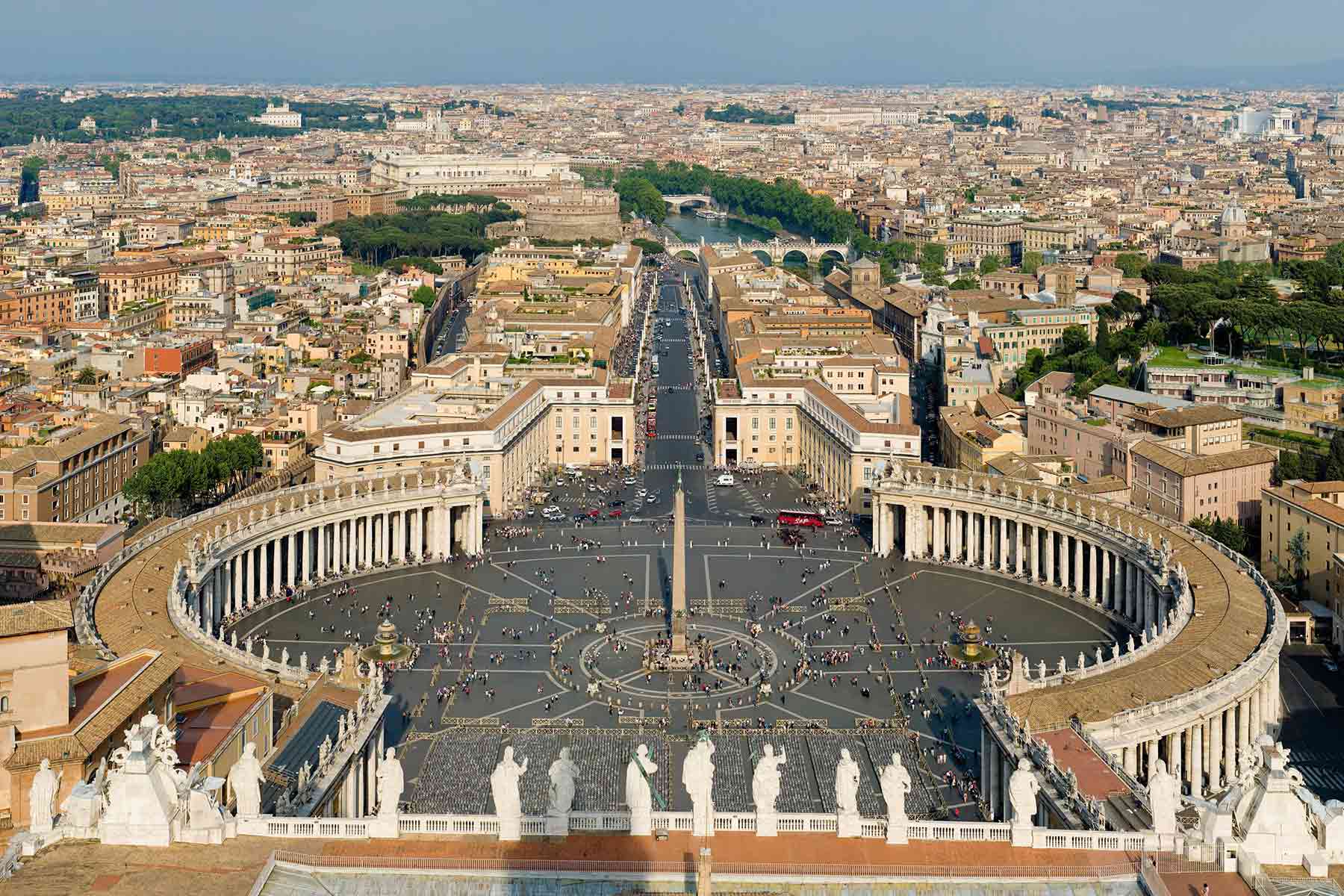
St. Peter's Basilica is free to enter, though expect long lines. Climbing to the dome's top costs a fee but rewards visitors with spectacular views over Rome.
Dress codes are strictly enforced. Shoulders and knees must be covered to enter St. Peter's Basilica and the Sistine Chapel.
Wednesday mornings feature papal audiences in St. Peter's Square when the pope is in residence. Free tickets can be requested in advance.
Want to learn some Italian before your visit? Consider working one-on-one with an Italian tutor to learn the basics or improve your conversational skills.
Using our proprietary cost database, in-depth research, and collaboration with industry experts, we deliver accurate, up-to-date pricing and insights you can trust, every time.