
The Best Guitarists of All Time
The Best Guitarists of All Time

Best guitarists of all time: legendary players who changed music forever
When you hear those first few notes of "Purple Haze," the iconic opening of "Stairway to Heaven," or the explosive tapping of "Eruption," you're witnessing guitar mastery at its finest. The best guitarists of all time revolutionized what the instrument could do, influenced generations of musicians, and created sounds that define entire genres.
This guide explores the top 10 guitarists of all time and the legendary players who earned their place in music history through innovation, technical brilliance, emotional depth, and cultural impact. From blues pioneers to rock revolutionaries, these famous guitarists transformed six strings and some wood into tools of pure sonic magic.
What makes a guitarist truly great?
Before diving into our list of the best guitar players of all time, it's worth understanding what separates good guitarists from the legends. The greatest guitar players combine several key qualities:
Innovation. Players like Jimi Hendrix and Eddie Van Halen popularized and advanced techniques that fundamentally changed how guitars could be played. Hendrix brought controlled feedback into the musical mainstream, and Van Halen brought two-handed tapping to prominence and redefined its use in rock.
Influence. The best guitarists of all time inspired entire movements. Eric Clapton's blues-rock fusion helped fuel the wave of British blues bands during the British Invasion era, most notably through The Yardbirds and Cream. B.B. King's expressive vibrato became the blueprint for electric blues guitar.
Emotional expression. Jeff Beck mastered making his guitar "sing" through dynamics and tone. David Gilmour proved that fewer notes played with perfect feel could be more powerful than technical showboating.
Musical vision. Jimmy Page crafted legendary riffs and produced timeless albums, shaping entire soundscapes that defined hard rock.
Top 10 guitarists of all time
Below are the legendary players who've earned their place among the greatest, ranked by their innovation, influence, and lasting impact on music:
| Rank | Guitarist | Era/Genre | Key Contributions | Signature Songs/Style |
|---|---|---|---|---|
| 1 | Jimi Hendrix | 1960s Rock, Blues & Psychedelic | Pioneered use of feedback and studio effects; revolutionized electric guitar expression | "Purple Haze," "Voodoo Child," and "All Along the Watchtower" |
| 2 | Eddie Van Halen | 1970s – 2020 Hard rock & Heavy metal | Popularized two-handed tapping; innovative guitar building; redefined rock guitar technique | "Eruption," "Panama," and "Jump" |
| 3 | Jimmy Page | 1960s – 1980s Hard rock & Heavy metal | Created iconic riffs; pioneered heavy rock production; used violin bow on guitar | "Stairway to Heaven," "Whole Lotta Love," and "Kashmir" |
| 4 | Eric Clapton | 1960s – Present Blues & Rock | Bridged blues and rock; influential with Cream and Derek and the Dominoes; three-time Rock Hall inductee | "Layla," "Crossroads," and "Wonderful Tonight" |
| 5 | B.B. King | 1950s – 2015 Blues | Defined modern electric blues; signature vibrato; influenced generations of blues and rock players | "The Thrill Is Gone," "Sweet Little Angel," and "Every Day I Have the Blues" |
| 6 | Stevie Ray Vaughan | 1980s – 1990 Blues rock | Revitalized blues in the 1980s; explosive technique with deep blues feeling; Hendrix influence | "Pride and Joy," "Texas Flood," and "Little Wing" |
| 7 | Jeff Beck | 1960s – 2023 Rock & Jazz fusion | Master of tone and emotion; pioneered rock guitar innovation; eight Grammy Awards | "Beck's Bolero," "Cause We've Ended as Lovers," and "Freeway Jam" |
| 8 | Keith Richards | 1960s – Present Rock, Blues rock | Created rock's greatest body of riffs; defined Rolling Stones sound; pioneered open G tuning | "(I Can't Get No) Satisfaction," "Jumpin' Jack Flash," and "Start Me Up" |
| 9 | David Gilmour | 1960s – Present Progressive rock | Expert in melodic phrasing; created atmospheric soundscapes; signature bends and tone | "Comfortably Numb," "Shine On You Crazy Diamond," and "Time" |
| 10 | Slash | 1980s – Present Hard rock | Iconic top hat image; created memorable riffs; bridged classic and modern rock | "Sweet Child o' Mine," "November Rain," and "Paradise City" |
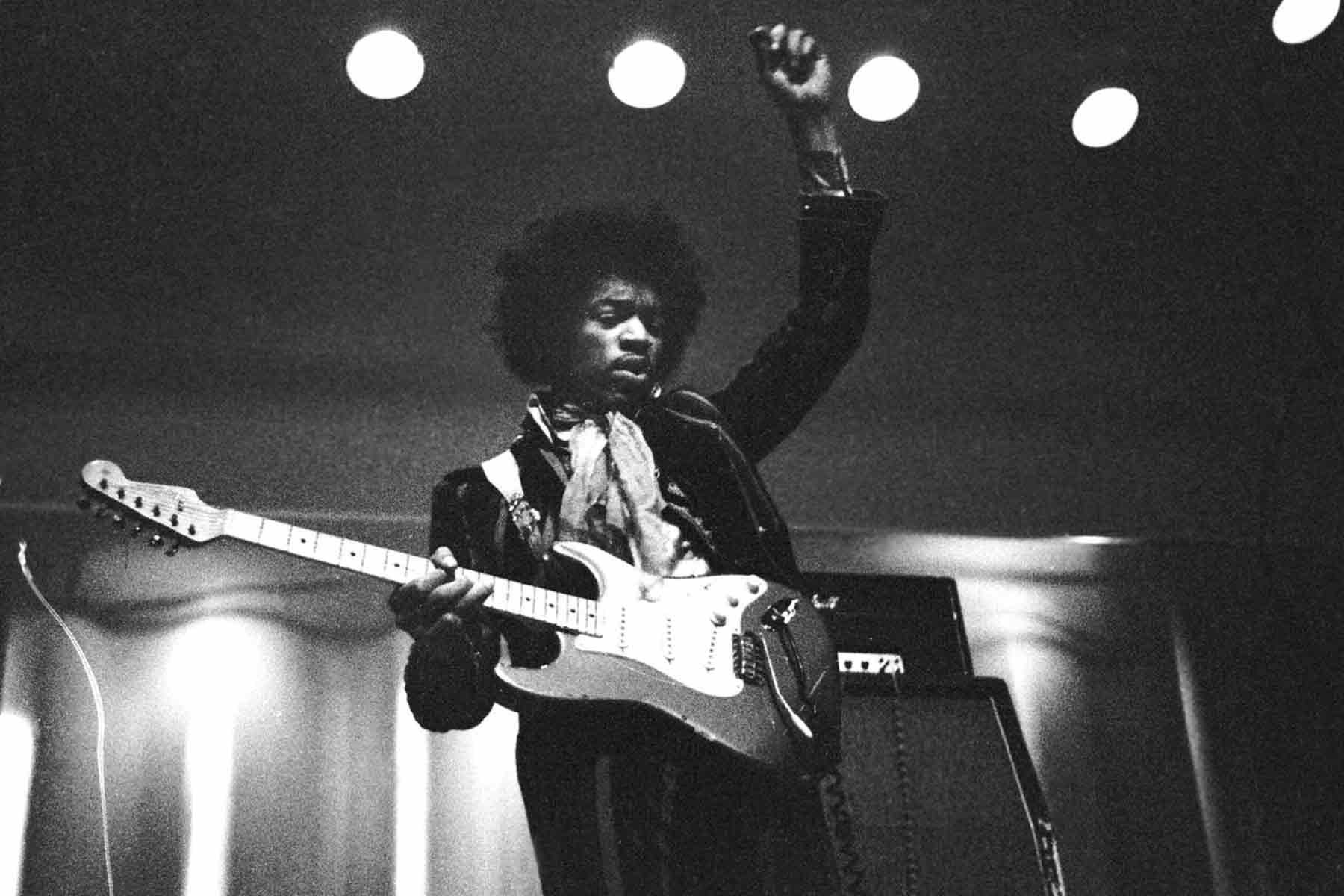
Jimi Hendrix: The revolutionary who redefined the instrument
When discussions turn to the best guitarists of all time, one name consistently tops the list: Jimi Hendrix. Despite a mainstream career that lasted just four years before his tragic death in 1970 at age 27, Hendrix transformed the electric guitar from an instrument into a vehicle for sonic exploration.
Hendrix didn't just play the guitar; he reimagined its possibilities. He was among the first to use feedback as a deliberate musical element. His mastery of effects pedals, particularly the wah-wah and fuzz, created textures that had never been heard before. Songs like "Voodoo Child (Slight Return)" and "Purple Haze" showcased his ability to coax otherworldly sounds from his Fender Stratocaster.
His rendition of "The Star-Spangled Banner" at Woodstock remains one of the most powerful political statements ever made with an instrument. Hendrix's influence extends far beyond rock music, reaching jazz fusion, funk, and even hip-hop.
Eddie Van Halen: Technical mastery meets rock innovation
When Van Halen's debut album dropped in 1978, the instrumental "Eruption" stopped guitarists in their tracks. Eddie Van Halen's two-handed tapping technique brought unprecedented speed, precision, and musicality to mainstream rock. He was also an innovator who built his own guitars, wiring and assembling the iconic red, white, and black striped "Frankenstrat" that became his signature instrument.
His playing combined classical training with rock attitude, knowing when to shred and when to serve the song, as demonstrated on tracks like "Jump." Every rock guitarist felt Eddie's impact; his innovations sparked the 1980s shred movement and inspired players like Steve Vai and Joe Satriani to push technical boundaries even further.
Jimmy Page: Riff master and sonic architect
As Led Zeppelin's founder and lead guitarist, Jimmy Page crafted rock's most recognizable riffs. "Whole Lotta Love," "Kashmir," and "Stairway to Heaven" highlight his gift for creating hooks that define entire songs. He famously used a violin bow during live performances of "Dazed and Confused," creating eerie, sustained tones that mesmerized audiences.
Page's genius extended to production and arrangement, layering guitars to create massive sonic landscapes. Using alternate tunings, acoustic arrangements, and Eastern influences, he elevated Zeppelin beyond simple blues-rock. While critics note his live playing could be inconsistent, his recorded output helped birth heavy metal and remains influential decades later.
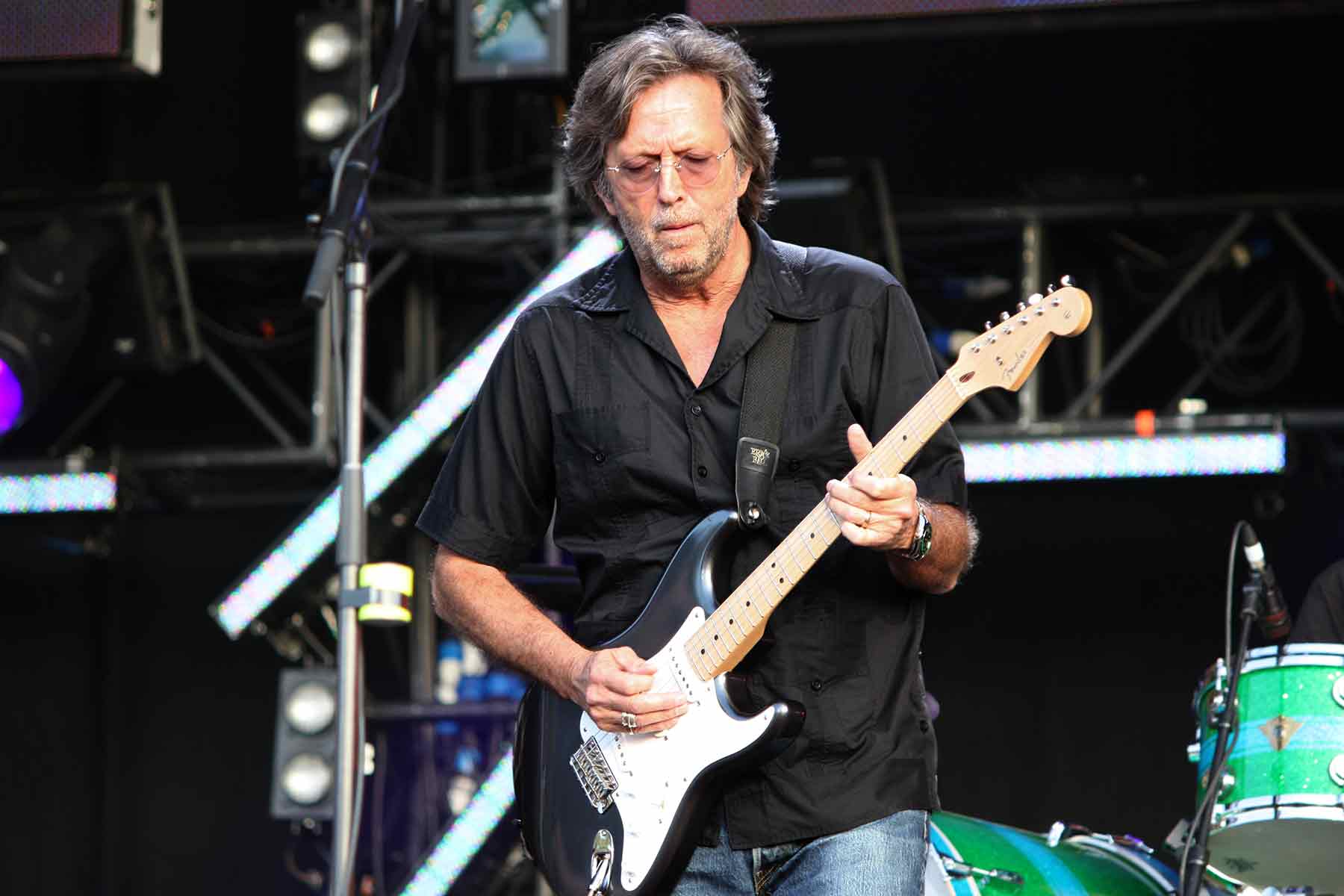
Eric Clapton: The blues-rock bridge builder
Eric Clapton's six-decade career demonstrates remarkable versatility. He's the only three-time Rock and Roll Hall of Fame inductee, recognized as a solo artist and with the Yardbirds and Cream. His work with Cream demonstrated how blues could be supercharged with Marshall amplifiers and psychedelic sensibilities.
Clapton brought authentic blues phrasing to British rock, studying American masters like B.B. King and Robert Johnson. The extended improvisations on "Crossroads" and "White Room" displayed his ability to blend technique with feeling. His time with Derek and the Dominoes produced "Layla," establishing the guitar hero archetype for generations.
B.B. King: The King of the Blues
Riley "B.B." King earned his title through decades of influential playing that defined electric blues guitar. His sophisticated phrasing, expressive vibrato, and economical note choices influenced virtually every blues and rock guitarist who followed. His technique emphasized bending strings with a distinctive touch, creating a vocal-like quality that made his solos sing.
Rather than relying on speed, King focused on making every note count with his beloved Gibson guitars named "Lucille." Rock guitarists from Eric Clapton to Gary Clark Jr. cite him as a primary influence. His hit "The Thrill Is Gone" became a standard, highlighting his ability to craft memorable melodies within the blues framework.
Stevie Ray Vaughan: The Texas tornado who revived the blues
Stevie Ray Vaughan burst onto the national scene in the early 1980s and played a central role in reviving mainstream interest in blues guitar. His explosive technique, deep blues feeling, and Hendrix-influenced style created a perfect storm of talent that captivated audiences. Playing with ferocious intensity using heavy-gauge strings, he combined technical fireworks with deep respect for blues traditions.
His 1983 debut "Texas Flood" announced his arrival with authority. Songs like "Pride and Joy" and his cover of Hendrix's "Voodoo Child" demonstrated a player who could honor his influences while forging his own path. Vaughan's tragic death in a helicopter crash in 1990 cut short a career that was still ascending, but he remains one of the most influential blues-rock guitarists.
Jeff Beck: The tone master and innovator
Jeff Beck's six-decade career established him as one of guitar's most inventive and expressive players. After replacing Eric Clapton in the Yardbirds, Beck carved a path defined by constant experimentation and an unmatched ability to make his guitar "sing."
Beck mastered using dynamics, tone, and phrasing to convey deep emotion, earning seven Grammy Awards during his lifetime and an eighth posthumously after his 2023 death.
His playing moved beyond traditional rock vocabulary into jazz fusion on albums like "Blow by Blow" and "Wired." Unlike many guitarists, Beck rarely relied on standard blues scales or predictable patterns. His improvisations felt spontaneous and conversational, influencing generations of players seeking to prioritize feel over flash.
Keith Richards: The riff machine
Keith Richards has been the musical engine behind the Rolling Stones since 1962, creating what Rolling Stone magazine called "rock's greatest single body of riffs." His immediately recognizable guitar parts on "(I Can't Get No) Satisfaction," "Jumpin' Jack Flash," and "Start Me Up" define classic rock. He popularized open G tuning, removing the low E string to create a distinctive rhythm guitar sound.
His rhythm playing, often overlooked in favor of flashier lead guitarists, provided the foundation for the Stones' enduring success. His weaving guitar parts with Ronnie Wood created the band's signature texture. Richards embodies the rock and roll lifestyle and proved that rhythm guitar can be as compelling as lead work.
David Gilmour: Master of melodic expression
David Gilmour's work with Pink Floyd established him as one of rock's most melodic and emotive guitarists. His solos on "Comfortably Numb," "Shine On You Crazy Diamond," and "Time" are masterclasses in phrasing, tone, and emotional delivery.
His signature technique includes wide, vocal-like bends and sustained notes that seem to hang in the air, with each solo carefully constructed to serve the song's emotional arc. His tone, achieved through Stratocasters, Hiwatt amplifiers, and carefully selected effects, became one of rock's most sought-after sounds.
Gilmour's approach emphasizes space and melody over technical showmanship, proving that atmospheric, thoughtful playing could be as powerful as aggressive shredding. He influenced generations of guitarists who prioritize musicality over speed.
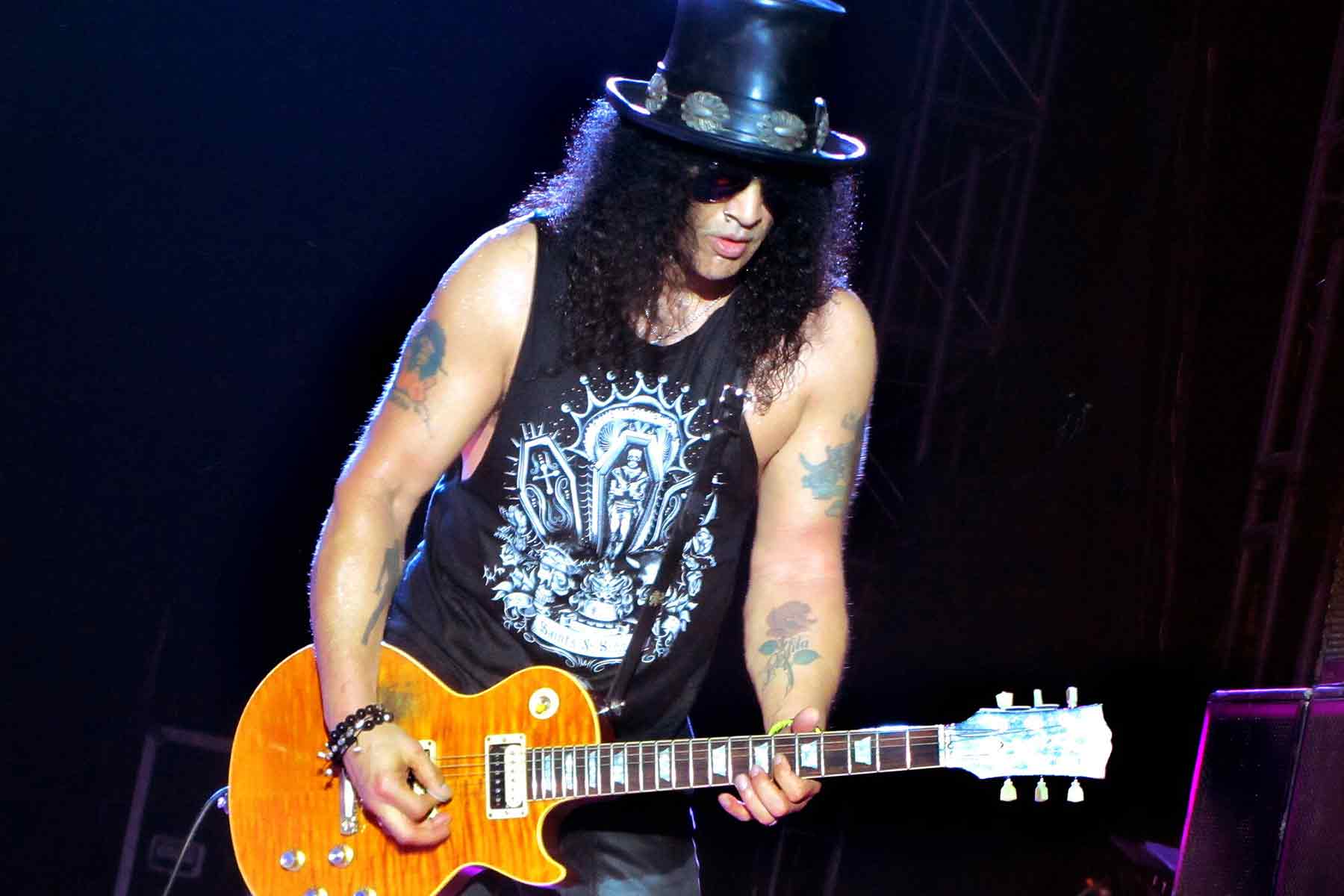
Slash: The top hat icon who bridged generations
Slash brought classic rock guitar into the late 1980s with Guns N' Roses, creating some of that era's most recognizable riffs. His work on "Sweet Child o' Mine," "November Rain," and "Paradise City" showcased a player who honored blues-rock traditions while appealing to a new generation.
His playing combined the phrasing and feel of classic blues-rock guitarists with hard rock's power and aggression. Slash's solos balanced technique with emotion, never sacrificing melody for flash. Guitar World ranked his "November Rain" solo among the greatest of all time, proving that traditional rock guitar could still captivate massive audiences.
Slash's iconic image—top hat, sunglasses, and Gibson Les Paul—became synonymous with rock guitar.
Other legendary guitarists who shaped music history
While our top 10 captures some of the best guitar players of all time, many other famous guitarists deserve recognition for their contributions to music:
Chuck Berry laid the foundation for rock and roll guitar with his signature riffs, duck walk, and showmanship. Songs like "Johnny B. Goode" established the blueprint that countless rock guitarists would follow.
Duane Allman mastered slide guitar with the Allman Brothers Band, creating soaring solos on songs like "Statesboro Blues."He also contributed unforgettable slide parts to Derek and the Dominos' "Layla" as a guest musician before his tragic death at age 24.
Ritchie Blackmore pioneered heavy metal guitar with Deep Purple, creating the immortal riff to "Smoke on the Water" and incorporating classical influences into hard rock.
Tony Iommi helped define the sound of heavy metal with Black Sabbath. After losing the tips of two fingers in an industrial accident, he tuned down his guitar and created the dark, heavy sound that defined metal.
Randy Rhoads blended classical music with metal during his time with Ozzy Osbourne, creating neoclassical metal before his death at age 25. His work on "Crazy Train" and "Mr. Crowley" remains influential.
Carlos Santana brought Latin influences to rock guitar, creating a distinctive tone and melodic style that spans decades. His sustained notes and singing tone make his playing instantly recognizable.
George Harrison demonstrated that guitar parts could be as important as the songs themselves with the Beatles. His melodic sensibility and tasteful playing influenced generations of musicians.
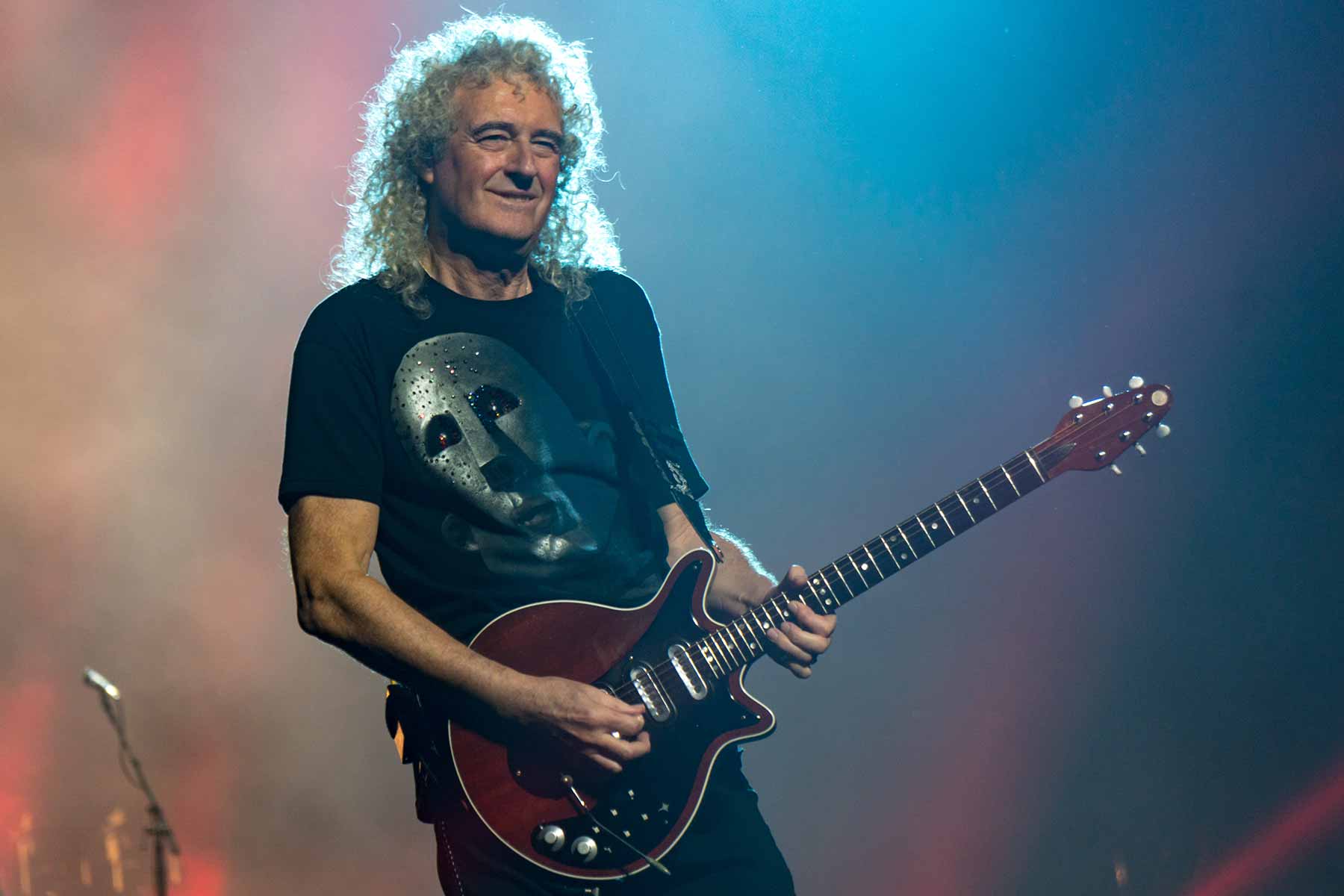
Brian May created Queen's layered guitar sound using his homemade "Red Special" guitar and wall of amplifiers. His orchestral approach to guitar added grandeur to rock music.
Angus Young and his brother Malcolm Young provided the engine for AC/DC, with Angus's high-energy solos and Malcolm's powerhouse rhythm guitar creating one of rock's most distinctive sounds.
Technical skill vs. emotional expression: The eternal debate
Guitar enthusiasts have long debated what matters more: dazzling technical skill or raw emotional expression. In reality, the greatest guitarists blend both. Technique gives them the tools to say what they want, but it’s the expression that turns those notes into something unforgettable. The legends master both and know when to dazzle with technique and when to move listeners with a perfectly placed note.
Learn to play like the best guitarists of all time
If you're inspired to learn the techniques that made these players legendary, use Lessons.com to find an amazing guitar teacher near you or online and start your path toward becoming the player you've always wanted to be.
Whether you're just starting your journey or looking to refine advanced techniques, connecting with a skilled instructor can help you develop the skills and musical understanding that define great guitarists.
Using our proprietary cost database, in-depth research, and collaboration with industry experts, we deliver accurate, up-to-date pricing and insights you can trust, every time.